Edwin Weindorfer is keeping the Stuttgart Open on its familiar financial track even as tennis’s prize-money fight sharpens around it. Speaking on Tuesday afternoon at the Stuttgart Weissenhof, the tournament director said the event will not change its approach, and that its prize money, including customary appearance fees, traditionally accounts for 20 to 30 percent of the total budget.
That argument lands now because the debate has intensified since before the French Open, when several leading players began pressing for a larger share of tennis revenue and, in some cases, hinting at a boycott. Jannik Sinner framed the dispute in blunt terms, saying it was about respect, while Aryna Sabalenka raised the possibility of players walking away if the sport does not move.
The contrast in Paris was stark. At the French Open, the men’s and women’s singles champions each received 2.8 million euros, the runners-up got half that amount and semifinalists took home 750,000 euros. Still, a group of top professionals says Grand Slam prize money amounts to about 15 percent of revenue, and they are asking for 22 percent. In Stuttgart, Weindorfer is arguing that the sport’s compensation already reflects a different reality.
“Tennis professionals earn very well and usually have a carefree life,” he said, adding that players at tournaments are paid for five-star hotel accommodation and are given a driver, with everything delivered and provided for them. He also said the Stuttgart winner receives about 117,000 euros this year, and that ATP Tour prize money generally rises by five to 10 percent annually. His point was plain: the sport is already generous, and the latest complaints do not change how this event is run.
That view cuts against the pressure coming from the top of the game. Players arguing for a bigger slice say the biggest tournaments depend on them far more than the current distribution suggests, while Weindorfer says the setup is already generous and that the issue should not be judged only by headline prize checks. The disconnect is made sharper by tennis’s fragmented structure, with the ATP Tour and the Grand Slams operating financially separately.
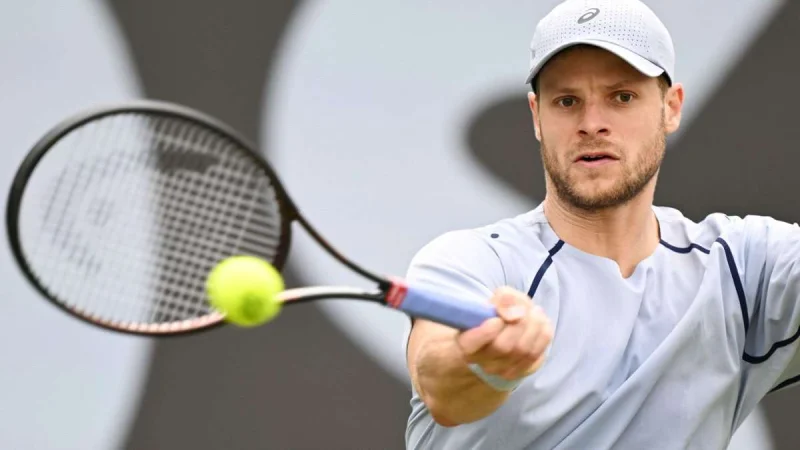
While the debate played out, Yannick Hanfmann was busy on Centre Court, winning his opening match in two sets. The 59th-ranked player, born in Karlsruhe, provided the kind of live sport that keeps the Stuttgart Open moving even as the broader revenue fight continues above it. What happens next is still the unanswered part: whether the pressure from top players pushes the Grand Slams or the ATP toward formal changes, or whether tournaments like Stuttgart stick to their own model and wait for the noise to pass.