


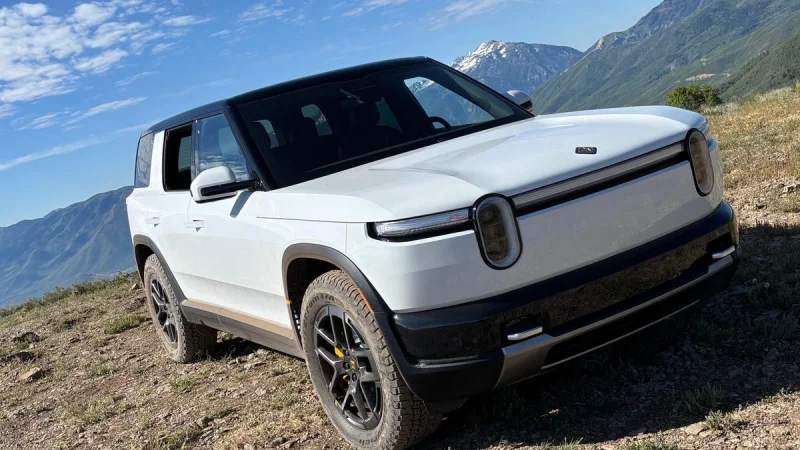
Rivian reported its biggest quarterly earnings beat to date in the first quarter of 2026, cutting its loss to 33 cents a share from the 60 cents Wall Street expected, and it said saleable R2 production has begun. The results gave investors a cleaner view of a company that is trying to prove it can grow beyond a niche electric-vehicle maker and into a business with a broader manufacturing base.
The numbers were not the only reason the quarter mattered. Rivian also said deliveries rose 20% year over year, while software and services generated $181 million in gross profit, a figure that underscores how much the company is leaning on more than vehicle sales alone. Shares were trading at $16.95 on June 1, after a long stretch in which the stock had already climbed about 68.65% from prior November 2024 coverage that highlighted the R2 pipeline, Volkswagen backing and the chance to take share in the mass-market EV market.

That backdrop helps explain why the market should have paid closer attention to what Rivian disclosed in Q1 2026. The company received a $1 billion investment from Volkswagen, secured a 50,000-vehicle autonomous mobility agreement with Uber and restructured its Department of Energy loan facility, a combination that strengthens the balance sheet and broadens the commercial story at the same time. Rivian, which develops, manufactures and sells category-defining electric vehicles, is emerging from a pivotal stretch with what looks like its strongest operating position since going public.
Still, the most important part of the quarter may be the part that is easiest to underestimate: saleable R2 production has started, but meaningful volumes are still ahead. The R2 is Rivian’s lower-cost SUV aimed at the mass market, and management expects it to reach positive gross margins within a few quarters of scaling to the levels the company needs. That leaves investors with a more immediate question than the earnings beat alone can answer — how quickly Rivian can turn a promising launch into real production volume without losing the margin progress it is now promising.
For now, the quarter suggests Rivian is no longer just talking about a next act. It has begun it, and the next test is whether the R2 can move from the line to the scale the business needs fast enough to matter.
