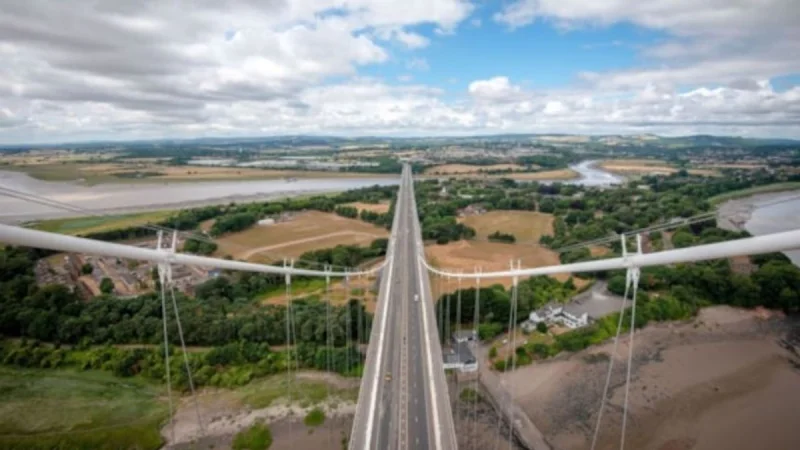
National Highways will start a two-month resurfacing trial on the M48 Severn Bridge on Saturday August 1, using a thinner method on a 200-metre west-bound stretch and bringing a string of closures and speed restrictions with it.
The work runs until Sunday September 27, but the traffic pattern changes earlier and lasts through the busiest part of the scheme. A contraflow is due to operate from 8pm on Saturday August 8 until 8pm on Friday September 18, with a single narrow lane in each direction on the eastbound carriageway, a 30mph limit and average speed cameras in place while it is running.
The timing matters because drivers using the M48 crossing between England and Wales are about to lose capacity on a route that already carries commuter traffic. National Highways plans a mixture of overnight closures, lane closures and 24-hour weekend closures to put the contraflow in place, and during full closures signed diversions will send traffic via the M4 Prince of Wales bridge. Access to Chepstow will stay open throughout.
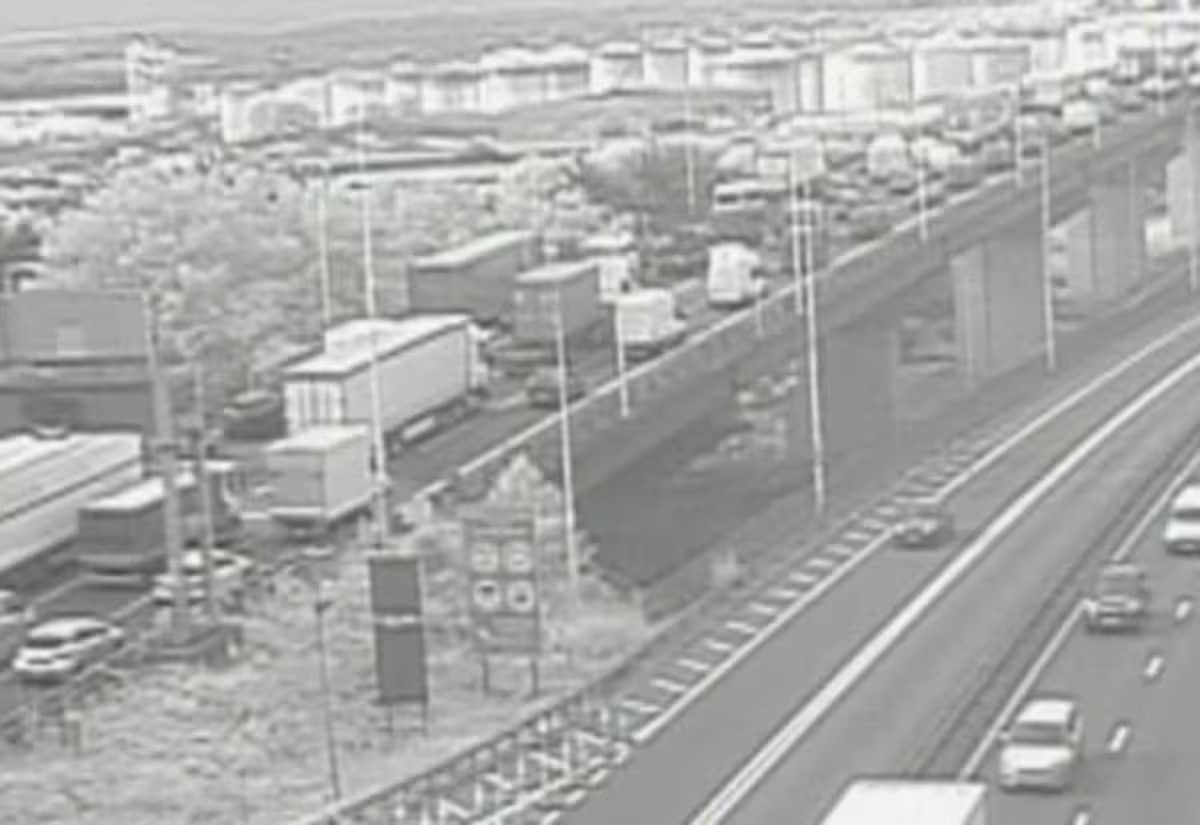
Chris Pope said the work may cause delays and urged road users to allow extra time for journeys, especially during peak hours. He also said many of the motorways and major A roads managed by the agency were built around 60 years ago and now need maintenance to keep them fit for purpose for generations to come.
That maintenance burden is built into the bridge itself. The original Severn Bridge design in the 1960s used a 35mm mastic asphalt surfacing laid by hand, and the same thickness was put back between 1989 and 1991. National Highways said that history is one reason the bridge needs a fresh approach now, with a thinner surface being tested to see whether future closures can be shortened.
The promise is fewer shutdowns later. National Highways says a successful trial would lead to full resurfacing of both carriageways in 2027 and 2028, while the work now is meant to improve the bridge's resilience, reduce the risk of future unplanned closures and future-proof the structure for years to come. For drivers, the trade-off is immediate: a major crossing is staying open only by being repeatedly restricted, and the size of the delay on any given day is still the question nobody can answer yet.