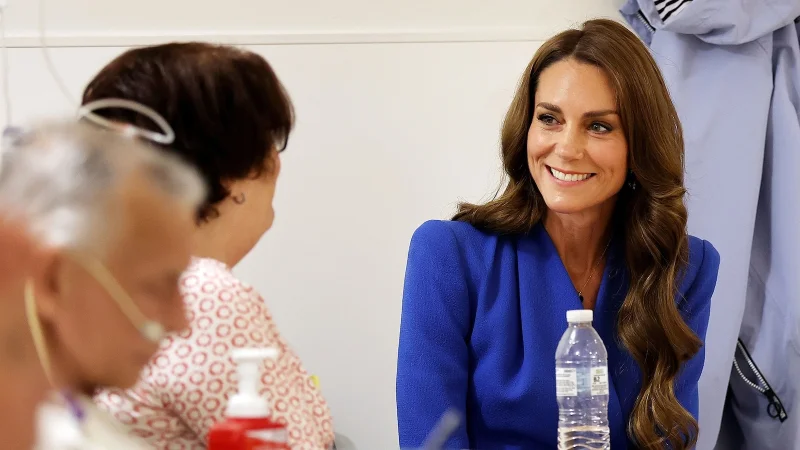
Catherine, Princess of Wales, went to a Manchester cancer center on Thursday and ended up in a moment that cut through the formality of the visit: she hugged Claire Lorente as the patient rang the bell to mark the end of her treatment. The appearance at the Christie NHS Foundation Trust put Catherine in front of patients and families navigating cancer now, not in the abstract.
That is why the visit drew attention beyond the usual royal diary. Catherine said she knew “it’s just as hard for families and loved ones,” and added that she understood “how hard it was for the children and my parents” before saying, “You go through it with them.” In a public setting, she was talking about the strain cancer places on children, parents and partners as much as on the patient.
Claire Lorente was the person at the center of the moment. Catherine met Lorente and her family during the visit, then hugged her before she rang the bell. It was a small gesture, but it turned a formal hospital stop into something recognizably personal, with the end of treatment marked in front of the people who had carried her through it.

The visit also landed because Catherine is notoriously private about her own health, yet she spoke openly about the effect treatment had on her family. That is what gave the comments weight: not a polished line about recovery, but a blunt acknowledgement that cancer changes the lives around the patient as much as it changes the patient. The remarks came after Prince William had already told Heart Breakfast on May 22 that he was “very, very proud” of how far she had come since beating cancer and that “our family couldn’t cope without her.”
William also said she had been “amazing” over “the last couple of years, particularly,” and noted that she “wanted to go and do lots of research,” calling her “a proper pro on early years.” He said he was glad the work had gone well and that she had “come back buzzing.” The Manchester visit brought those comments into sharper focus: Catherine was not speaking about recovery from a distance, but standing inside a cancer center and addressing the people who live with its daily cost.
What remains unclear is the private part of the story she did not discuss. The public moment showed Catherine back in front of patients and families, but it did not spell out what treatment she received or when her remission began. For now, the clearest answer from Manchester is the one Lorente saw in person: the end of treatment may belong to one patient, but the burden and relief of cancer rarely belong to one person alone.