


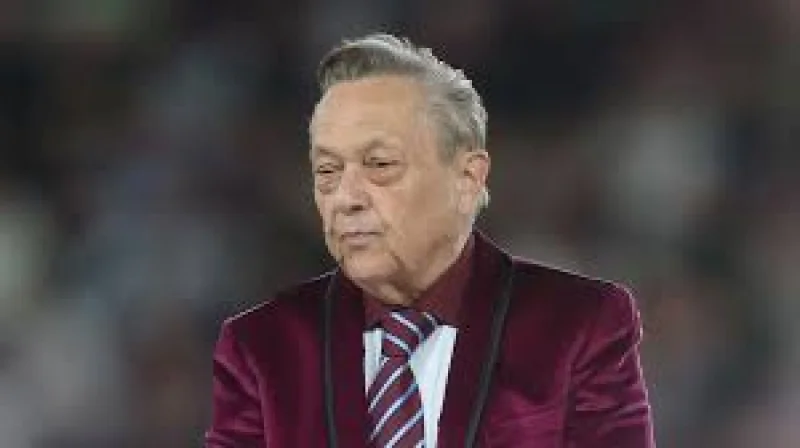
David Sullivan is being blamed for West Ham United's slide toward relegation, with the club now heading for the Championship after years of poor planning, mixed recruitment and managerial churn. The case against the largest shareholder is blunt: warning signs have been ignored since 2022, and nothing is expected to change until he sells up.
That is why the name David Sullivan is being searched now. West Ham won the Conference League final in June 2023, but the sense that the club had turned a corner quickly faded as the years of European football gave way to a sharp decline. The move from Upton Park to the London Stadium was sold as a jump to the next level 10 years ago; instead, the promise has unraveled into another fight to stay up.
The club's problems did not appear overnight. League form under David Moyes began to slide in January 2022, even though he had previously shielded West Ham from the worst of the dysfunction around him. That protection did not last forever. By the start of 2024, it was already an open question whether a new deal for Moyes should have been on the table, because momentum had started to ebb before his departure.
West Ham tried to rebuild around major spending, but the results have been thin. The club received £105m from Arsenal for Declan Rice, then added Tim Steidten as technical director shortly after the Conference League final. He left in February 2025. In between, West Ham spent £91.8m on Konstantinos Mavropanos, Jean-Clair Todibo and Maximilian Kilman, yet Edson Álvarez spent the season on loan at Fenerbahce and Mohammed Kudus was sold to Tottenham.
The forward line has not rescued them either. Niclas Füllkrug scored three goals in 26 league appearances before joining Milan on loan last January, and he still has two years left on his deal. Sources say Jarrod Bowen never stopped trying, but the captaincy has weighed on him. Graham Potter has replaced Julen Lopetegui as manager, while Kyle Macaulay is now at Manchester United, another sign of how much of the support structure has already been pulled apart.
The uncomfortable part for West Ham is that the damage has been building for a long time. The club went down in 2003, returned to the top flight, and later promised the London Stadium would lift them into a new era. Instead, the ownership has presided over a slide from consecutive years of European football to a relegation fight that now looks increasingly hard to escape. Whether Sullivan sells, or whether anything changes before that, is the question hanging over the club and its supporters.
