


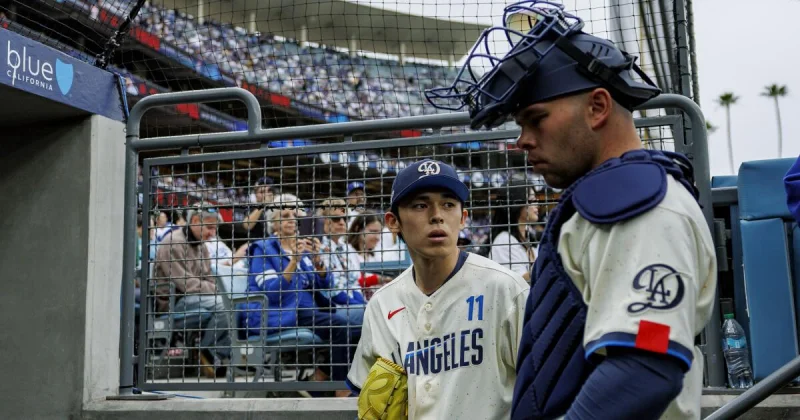
Roki Sasaki added a splitter to his pitch mix a little over a month ago, and the change has already altered the way the Dodgers are judging his season. Since introducing the new offspeed pitch, the 24-year-old right-hander has gone at least five innings in all six of his starts, a far steadier run than the one he had before it arrived.
That matters now because Los Angeles is again trying to hold a rotation together without Tyler Glasnow and Blake Snell. Glasnow left his May 6 start after one inning because of back spasms and still had not been cleared to throw off a mound, while Snell did not make his season debut until May 9, lasted three innings, then landed on the 60-day injured list after elbow discomfort led to surgery. Sasaki’s improved outings have given the Dodgers a needed bridge while those arms are out.
The pitch itself is a splitter, and it is being tracked separately from the offspeed offering Statcast reclassified last year as a forkball. Sasaki throws the splitter about five miles an hour faster than that earlier pitch, and the extra weapon has made his profile look much cleaner. His strikeout-walk differential has more than tripled compared with his first four starts of the season, and his ERA since the change has fallen by 2.33 runs per nine.
That progress does not erase the uneven start that came before it. Through 10 starts and 51 innings, Sasaki still carried a 4.59 ERA and a 5.04 FIP, numbers that can make his growth look modest at first glance. Last year’s shoulder impingement cost him four and a half months, and he found some success in the bullpen last fall after the layoff. Early this season, his starts looked a lot like the struggle that followed him then. He had completed at least five innings in only four of eight starts last year and just one of his first four this year.
The Dodgers, though, have kept working with him in the majors rather than pushing him to Triple-A or asking him to move to the bullpen. They wooed Sasaki in part because of their winning record and in part because they promised to keep developing him, and they have resisted the easy roster answers even when injuries created the temptation to change course. For now, the tradeoff looks justified: a young starter with real flaws is also giving them better innings when they need them most. The open question is whether the splitter keeps working long enough to make this version of Sasaki more than a brief midseason correction.
