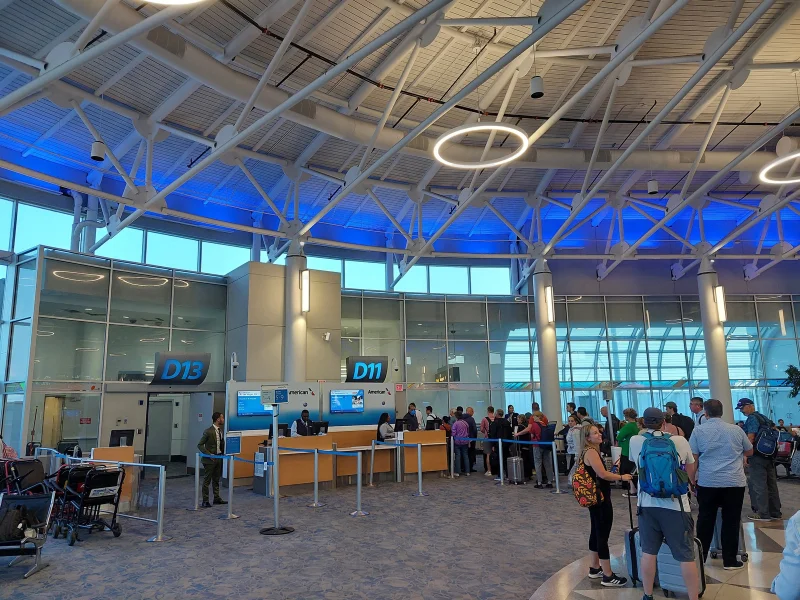
The Federal Aviation Administration halted departures at Dallas-Fort Worth Airport on Tuesday, and the shutdown quickly spilled into one of American Airlines’ busiest operations centers. By the end of the day, the airline had canceled 130 flights and delayed 832 more as thunderstorms snarled traffic through its biggest hub.
The FAA’s ground stop was in effect until at least 5:15 p.m. Tuesday, and the numbers at DFW were large enough to ripple far beyond a routine weather delay. Dallas-Fort Worth Airport logged 135 departing cancellations and 105 arriving cancellations, while FlightAware data showed it had the most canceled flights of any U.S. airport that day.
That surge mattered because American Airlines handles more than 82% of all flight operations at Dallas-Fort Worth International Airport. When weather slows that airport, it does not just create a bad afternoon for travelers passing through Texas. It can choke a core piece of the airline’s national network, and that is what happened on Tuesday.
The disruption also had a personal edge for passengers already on the ground. One traveler on flight AA777 from Las Vegas said about 50 passengers waited roughly three hours at baggage claim after the plane never unloaded before being moved to a hangar. That kind of delay turns a weather event into an all-day problem for travelers who thought they had already arrived.
The discomfort was not confined to Tuesday. Dallas-Fort Worth Airport and American Airlines announced additional disruptions on Wednesday, and as of early morning on June 3 the airport still had 28 departing cancellations and 55 arriving cancellations. The weather may have triggered the FAA ground stop, but the fallout outlasted the thunderstorm and kept the airport among the hardest hit in the country.
That leaves the key question for travelers: when did normal operations fully resume? The available information shows the cancellations and delays were still being tallied the next day, and the airline’s hub remained under pressure even after the ground stop was no longer the headline. For passengers booked through DFW, the disruption did not end when the storm moved on.