


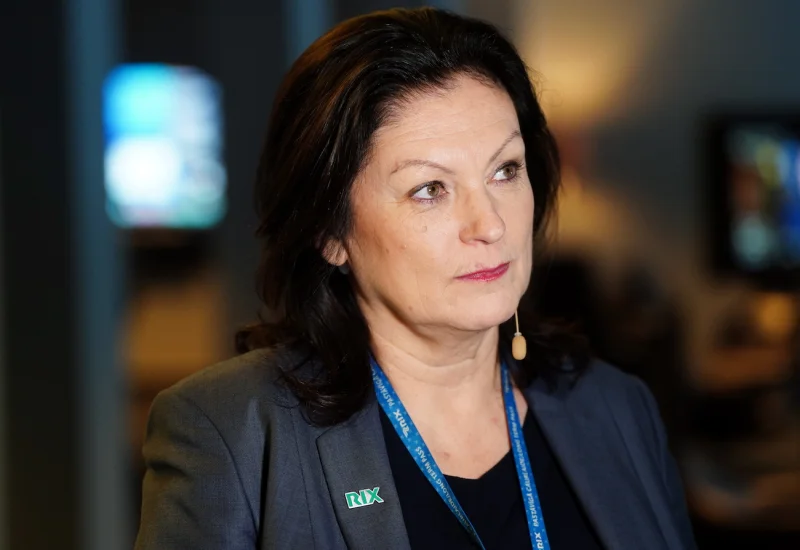
Riga Airport expects to handle between 7.1 million and 7.2 million passengers this year, but the outlook is being squeezed by fuel costs, market closures and possible route losses. CEO Laila Odiņa said on Friday that the airport has already built several contingency scenarios if airBaltic’s financial situation changes.
The warning lands at a moment when the airport is still searching for a stronger post-pandemic recovery. Riga Airport handled 1.997 million passengers in the first four months of this year, down 1% from the same period last year, and it remains 9% below 2019 levels even after serving 7.111 million passengers in 2025. That makes this year’s target look achievable, but only just.
Odiņa said the continued closure of the Russian, Ukrainian and Belarusian markets remains one of the biggest obstacles to growth, while higher aviation fuel prices are forcing airlines to reassess route profitability and expansion plans. She said new carriers are entering Riga Airport very slowly and in very small numbers, a sign that the hub’s growth is being capped not by demand alone but by the economics of flying into the market.
The biggest near-term risk is whether direct flights from Riga to Dubai and Tel Aviv return before the end of the year. Odiņa said the airport could lose about 100,000 passengers if those routes are not restored, and she added that the sharp rise in aviation fuel prices is now having the greatest impact on passenger traffic and airline planning.
Riga Airport also watched fuel supply closely after conflict in the Middle East raised fears that aviation fuel reserves might last only six weeks. Odiņa said consultations with suppliers later showed supplies should remain sufficient through the end of the summer season, although roughly 40% of Europe’s aviation fuel is transported through the Strait of Hormuz and the risk has not disappeared.
That leaves airBaltic at the center of the airport’s planning. The carrier accounts for about 58% of Riga Airport’s passenger traffic and around 40% of its revenue, which is why Odiņa said the airport has prepared several contingency scenarios around the airline’s financial difficulties. “airBaltic’s survival is, of course, extremely important to us,” she said, while adding that the airport could adapt if circumstances changed, even if it would take time.
For now, Riga International Airport remains the Baltic states’ largest aviation hub, but its next stage of growth depends on more than passenger demand. It needs fuel costs to ease, key routes to return and airBaltic to stay stable enough to keep the traffic flowing through Rix Airport.
