


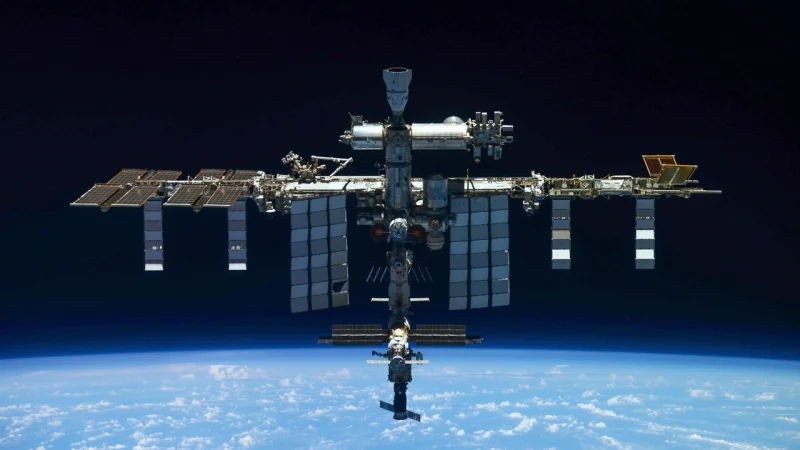
NASA told five astronauts inside a SpaceX Dragon capsule on Friday to stop sheltering and return to normal work aboard the International Space Station after Russian engineers paused repairs on an air leak in the station’s Zvezda service module. The crew had spent about two hours in the spacecraft preparing for the possibility of evacuation before the order was lifted.
The change affected the four members of SpaceX Crew-12 and a fifth NASA astronaut, who had been told to use the Dragon as a safe haven while the station’s Russian segment dealt with the leak. The directive came after Roscosmos halted structural repair work inside the Zvezda transfer tunnel, known as PrK, while more measurements and data were assessed.
The Zvezda module sits at the heart of the Russian side of the station. NASA says the 43-foot service module holds living quarters, life support, communications, electrical power distribution, data processing, flight control systems and propulsion systems, which is why any leak there draws close attention from both agencies. NASA’s office of inspector general has already called cracks and air leaks across the station a top safety risk, and in June a chartered flight carrying India, Poland and Hungary’s first astronauts in decades was postponed because of leak concerns.
Roscosmos said its specialists found the two air leaks while pressurizing the transfer chamber to the ISS chamber and that one leak site was sealed quickly with a layer of the two-component sealant Germetal-1. The second potential leak site, it said, is on the conical portion of the transfer chamber. Even so, Roscosmos told Tass there was no threat to the safety of the crew or the ISS onboard systems, a contrast with NASA’s decision to have astronauts prepare for a possible evacuation in the first place.
The brief shelter order shows how quickly a routine station problem can turn into a crew operations issue, even when the parties involved publicly frame the risk differently. NASA said it looks forward to working with Roscosmos on a collaborative approach to address the leaks, but the unresolved question is what further measurements convinced Russian engineers to pause the repair effort and what they will do next to keep the chamber stable.
