


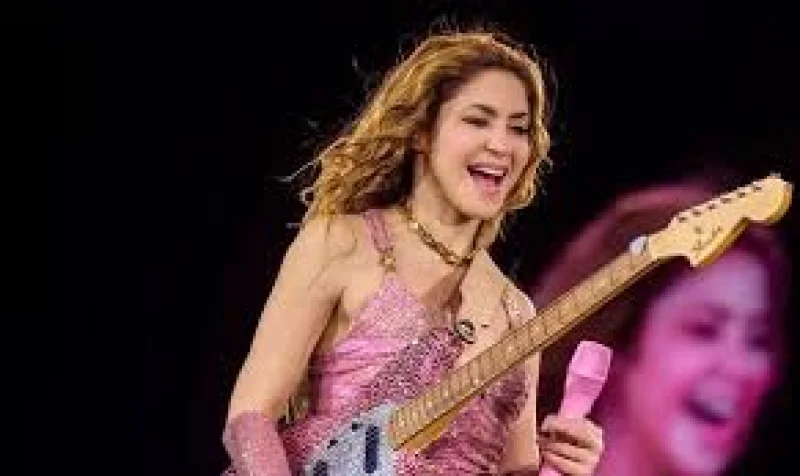
Shakira says she is making new music, and one of the songs already has a clear purpose: “Dai Dai,” written for the World Cup, will send its income to help children in vulnerable situations. The singer said the track was built as a message for children who have been told their dream is too big, and for those who still lack access to quality studies.
The timing matters because Shakira is once again tied to football’s biggest stage, this time as the protagonist of the first halftime show in a football World Cup. She said she wanted to write something for this tournament and knew it had to carry the ingredients of a World Cup song: rhythm, energy and a powerful message. The melody and lyrics, she said, came together easily.
For readers looking for what is new now, the answer is that Shakira is not only revisiting the World Cup stage but also using it to launch fresh material. She said she is creating “much new music” and collaborations, a sign that her next phase is still in motion after 30 years dedicated to her work. That longevity is part of the reason her return to the tournament lands with weight: she is not treating it as a one-off appearance, but as another chapter in a career that keeps folding pop, sports and public messaging into the same spotlight.
Yet the song’s promise sits against a darker view of the moment. Shakira said the world is fractured, divided and manipulated by algorithms, even as she described the World Cup as a project about unity at a delicate social and political time. That contrast gives “Dai Dai” its edge. It is meant to inspire children without visibility, but it is being released into a culture she says is harder to bring together than the anthem itself suggests.
She has made the human side of that argument personal. Motherhood, Shakira said, made her stronger, and she added that she now has two children to care for. She also said she would tell her 20-year-old self to enjoy more and believe in herself, a line that lands differently from an artist who is now speaking not just as a performer, but as a parent thinking about the opportunities children are given, and the ones they are denied. The next questions are practical ones: when “Dai Dai” will reach listeners, how its proceeds will be directed, and how the World Cup stage will carry that message when she steps into the first halftime show in the tournament’s history.
