


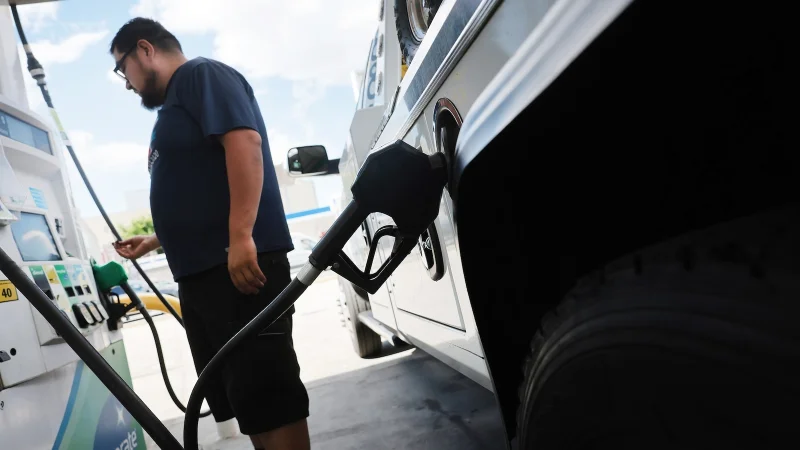
The national average price of gas fell to $4.26 a gallon on Wednesday, giving drivers a little relief after a recent peak on May 21. The drop of 30 cents, or 6.5%, from that high does not erase the pressure at the pump, but it marks the sharpest pullback in weeks.
That is why gas prices are drawing attention now: they moved lower after spending much of the spring near painful levels, and people looking for a clearer direction are still getting mixed signals. In late February, the average gallon cost less than $3, a reminder of how quickly prices have swung since then.
Patrick Penfield said the market is still moving too fast to call it stable. “It’s so volatile,” he said, adding that if the war ended, prices would likely go down, but if it continues, “you’ll see prices go up.”
At the state level, the picture remains wildly uneven. AAA data showed Georgia with the lowest average at about $3.79 a gallon, while California was highest at $5.99. Six states are now selling gas at an average of $4 a gallon or less, and California’s average eased by about 10 cents over the past week.
The recent drop tracks with weakness in oil markets. U.S. oil prices fell as low as about $86 a barrel on Friday after dropping about 20% over a 10-day stretch, and crude still makes up more than half of what drivers pay at the pump, according to the U.S. Energy Information Administration. Ramanan Krishnamoorti said gas prices have seen “a big push” lower because crude prices fell, and said that decline has been tied to signs that the president believes the U.S. and Iran are close to an agreement.
There is still a catch. Over the past two years, the average margin for gas sellers was about 34 cents a gallon, but it now stands at 50 cents a gallon, which gives retailers room to absorb some changes and still leaves drivers exposed if crude turns higher again. Denton Cinquegrana said there is still “some room for gas prices to move down,” but analysts also warned that if the war continues, prices could climb again and top $5 a gallon by next month.
The larger force behind the swings has not changed. Gasoline prices surged when the war began because Iran effectively closed the Strait of Hormuz, a waterway that handles about one-fifth of global crude supply. The United States is a net exporter of petroleum, but its gasoline prices still move with global oil markets. For now, the retreat at the pump offers only temporary breathing room, and the next leg will likely be decided by oil traders long before it shows up in the driveway.
