


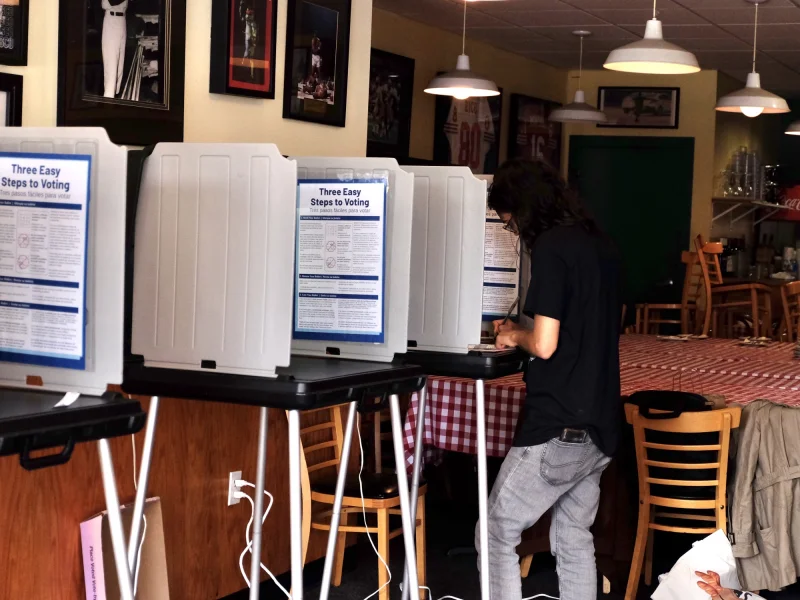
San Francisco voters were heading into Election Day with turnout still stuck at 19 percent, leaving the city’s June 2 result likely to be decided by a relatively small share of the electorate. By Monday evening, only about 102,000 of the city’s 534,000 registered voters had returned ballots.
That is the search now, because polls are open until 8 p.m. Tuesday and the final tally could still shift if more voters decide to cast ballots in person or return them at the last minute. The city’s pre-election pace is slower than in the last two statewide primaries, when turnout the day before the vote was 22 percent in 2022 and 25 percent in 2018.
Junyao Yang has been following the campaigns of all the District 4 supervisor candidates this year, and last week she published a series of articles on most of them as part of Mission Local’s Meet the Candidates coverage. That broader local race now sits beside the turnout picture, because even small swings in late voting can matter when participation is this thin.
The pattern is not unique to San Francisco. Across California, Democrats had returned ballots at a lower rate than Republicans by Monday evening, even as many Democratic voters were still holding off until the last minute to decide who should be governor. Democratic turnout was at 15 percent statewide, compared with 19 percent for Republicans, a gap that adds another layer of uncertainty to Tuesday’s count.
In one of the sharper late-campaign moves, two new groups, Pro-Choice Majority Action and Rising Tide Collective, spent $670,000 over the past two weeks to boost Supervisor Connie Chan’s campaign. Because the groups are so new, they have not yet had to disclose their funding sources, though Pro-Choice Majority Action has ties to pro-Israel PACs and spent money on pro-Chan ads.
Chan’s campaign pushed back hard, calling the idea that she is carrying water for AIPAC “absurd and laughable.” Spokesperson Julie Edwards said the charge was a desperate attempt by the opponent to undermine the campaign because it has momentum to win on June 2.
For now, the clearest read on San Francisco is simple: turnout is unusually low for the eve of an election, and the final margin may depend on whether Tuesday brings a late surge or a quieter-than-usual finish. If the city’s voters do not show up in much larger numbers before the polls close at 8 p.m., the sf election results will be shaped by a narrow slice of the electorate.
