


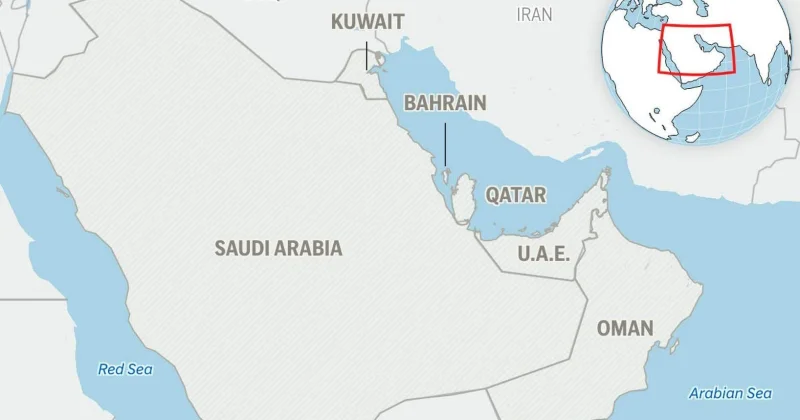
A court in Bahrain sentenced a member of the Gulf kingdom’s domestic spy agency to life in prison on Tuesday over the in-custody death of Mohamed al-Mousawi, a ruling that puts rare legal pressure on the security apparatus accused of abusing detainees during wartime arrests.
State news said investigators concluded the unidentified National Intelligence Service officer was responsible for the 32-year-old Shiite Muslim’s death. Prosecutors filed charges in April, including assault resulting in death, after the case was tied to the body returned to his family bearing bruises, burns and cuts.
The sentence lands at a moment when the case has taken on a wider meaning. Al-Mousawi was among dozens detained or charged at the height of the war for protest expressing support for Iran or espionage-related offenses, after Iranian missiles struck Bahrain. The island kingdom is Sunni-ruled and Shiite-majority, and it hosts the U.S. Navy’s Fifth Fleet, which has long made security and sectarian tensions inseparable in the public record.
A forensic expert with Physicians for Human Rights said the injuries matched descriptions of blunt force trauma and torture, a detail that sharpened the gulf between what the family saw and what the state has said about the case. Bahrain’s government has denied sectarianism and says authorities acted lawfully, while also pointing to independent bodies that investigate abuse claims.
Rights groups were not satisfied. The Bahrain Institute for Rights and Democracy said on Tuesday that the life sentence was inadequate and demanded transparency about the officer and the circumstances surrounding al-Mousawi’s death. It is a demand that now hangs over a case in which the public prosecutor’s special investigative unit still has not named the dead man, let alone said exactly what the officer did.
That gap matters because the punishment, while severe, leaves the central facts of the killing sealed off from public scrutiny. The court has assigned responsibility, but not the full story, and in Bahrain that is often the difference between accountability on paper and accountability that can be seen.
