


The Oxford Union has postponed Tommy Robinson’s appearance by several weeks after its invitation triggered protests, resignations and censure motions inside the 200-year-old debating society.
The delay matters because Robinson, described as a convicted former English Defence League leader and far-right activist, was due to speak on a motion that read: “This house believes the West is right to be suspicious of Islam.” The session drew immediate scrutiny, and the question now is not only whether it will go ahead, but whether it will be carried to a wider audience.
That is why the event has become a flashpoint beyond Oxford. Robinson was set to appear alongside Laurence Fox and Calvin Robinson on the same side of the motion, giving the debate a national profile before it was pushed back. For the Union, the invitation has already become a test of how far a student society can go in hosting speakers whose presence is likely to provoke as much anger as argument.
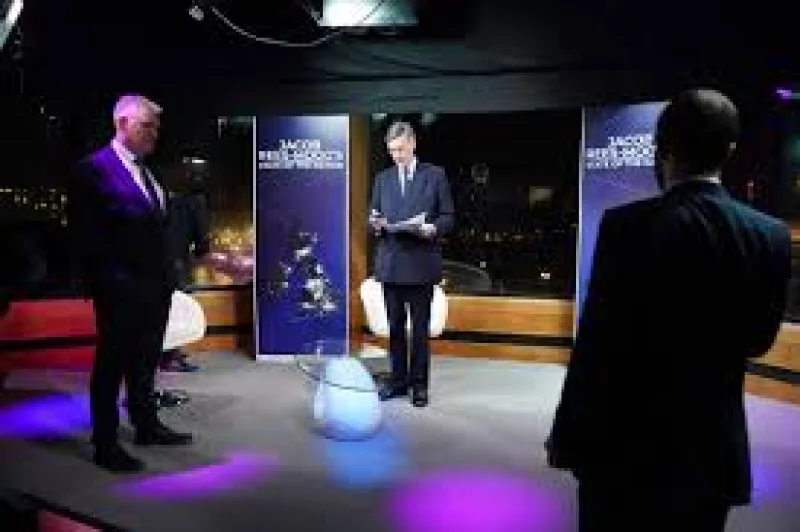
The Oxford Union’s formal response has focused on process. A spokesperson said multiple news outlets, including the Middle East Eye and GB News, wished to report on the event, calling that standard practice and noting it has been done for many historic debates. The same spokesperson said GB News was not set to film the event, and that there was never an agreement as such.
That denial came after suggestions, reported by another outlet, that there had been a deal for GB News to broadcast the appearance. It also cut against claims in a rule 39 motion circulated at the Union, which accused organisers of having arranged for GB News to film the debate and broadcast it nationally. The motion said: “This Union’s debates are for its members. They are not content for GB News.”
Those competing accounts leave one issue unresolved: whether any internal arrangement ever existed for filming or broadcast. Sources close to the Union alleged that Jacob Rees-Mogg helped broker a plan for GB News to record and air Robinson’s speech, but the Union said no such agreement existed. Rees-Mogg sits on the board of the Oxford Literary and Debating Union Charitable Trust, which says its purpose is “the advancement of education amongst the members of the University of Oxford by the provision of debates.”
The backlash has not been confined to the debate chamber. Members have resigned, letters have been published, and formal censure motions have been lodged over the invitation itself. That pressure helps explain why the Union moved to delay the appearance after protests, even as the debate motion and the broadcasting dispute continued to circulate.
For now, the Union has bought time, not a resolution. Robinson’s speech may yet happen, and it may yet be filmed, but the institution has not said when, or whether, the event will ultimately proceed.
