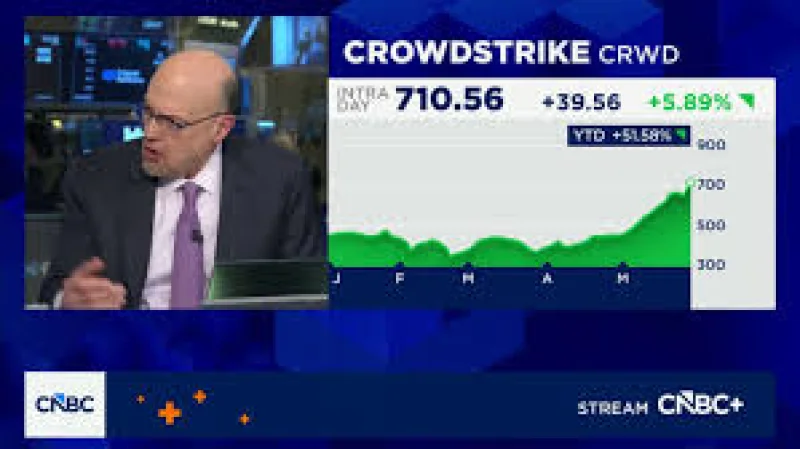
CrowdStrike chief executive George Kurtz is telling investors that the AI boom could become a major new engine for the company, and he is framing the business as a security layer for the software era now taking shape. He said the opportunity is massive because enterprise AI needs protection across many layers.
That message lands at a moment when crwd stock is already being watched as part of the broader rush into AI-linked names. Investors are hunting for companies that can justify higher valuations with a real tie to the technology, and CrowdStrike fits that screen better than most. The company closed fiscal 2026 with $5.25 billion in annual recurring revenue and a market value of about $160 billion, while its shares have become a proxy for whether cybersecurity can be the next hot AI trade.

Kurtz said CrowdStrike is securing every layer from GPU to agent to prompt, a pitch that puts the company inside the architecture of enterprise AI instead of around the edges of it. That matters because the market wants more than a theme. It wants proof that AI can lift the revenue line. CrowdStrike ended fiscal 2026 with 23% year-over-year revenue growth in the quarter that finished Jan. 31, and its five-year revenue compound annual growth rate stands at 40.6%, with a three-year rate of 29%.
But the story is not all acceleration yet. Even as AI may open a larger market, CrowdStrike has not seen revenue growth speed up because of the AI revolution, and its growth has been slowing from earlier levels. That gap is what makes the current debate so important: the company is talking about a massive opportunity, but investors still have to decide when that opportunity starts showing up in the numbers.
The next benchmark is already on the calendar. CrowdStrike is forecasting $6.49 billion in annual recurring revenue by the end of fiscal 2027, which would amount to 23.6% year-over-year growth. If it gets there while proving that AI security is more than a slogan, the stock will have a better case for its premium. If not, the market may keep treating the AI story as promise rather than payoff.