


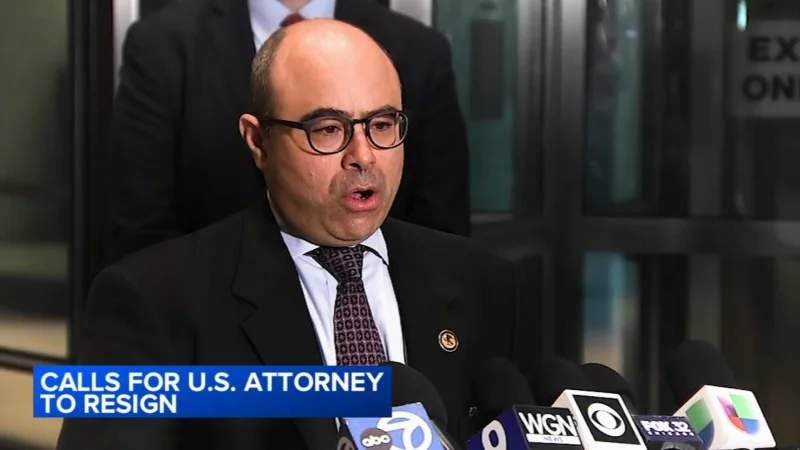
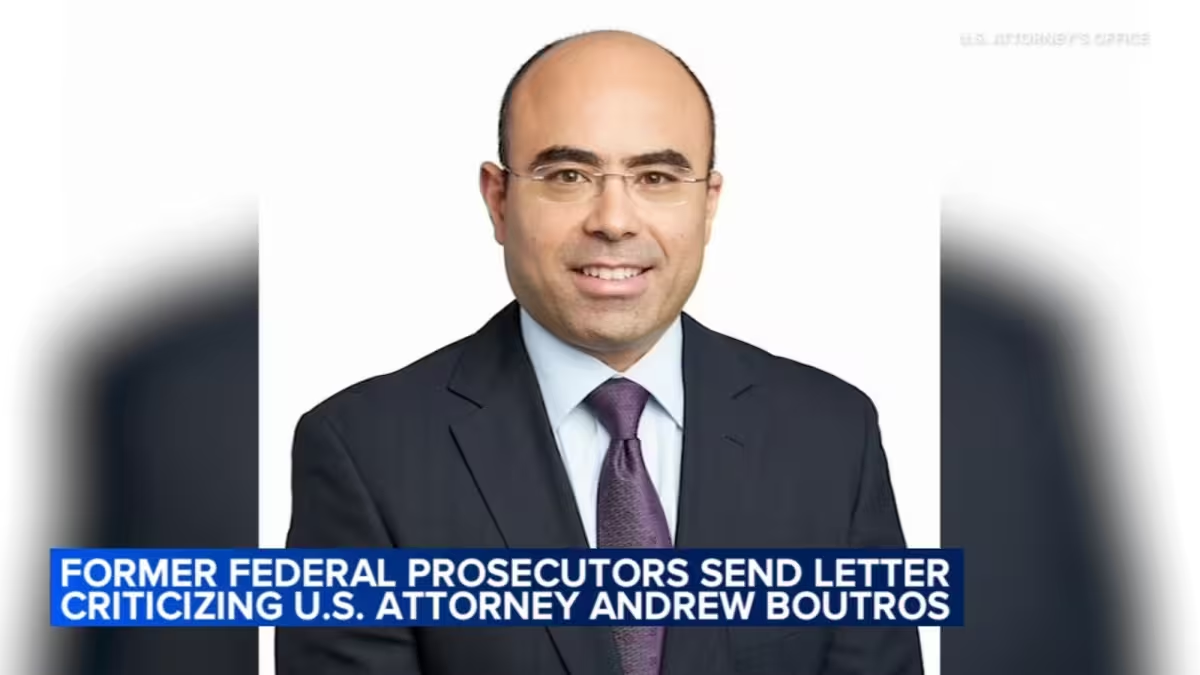
Criminal charges against the Broadview Six were dropped on May 21 after revelations of apparent prosecutorial misconduct upended a case that had nearly gone to trial this spring at the Dirksen Federal Courthouse. The collapse ended a seven-month fight for defendants Kat Abughazaleh, Brian Straw, Michael Rabbitt and Andre Martin, and left Chicago U.S. Attorney Andrew Boutros facing a sharp credibility crisis.
The group had been accused of felony conspiracy over a Sept. 26 confrontation in which prosecutors said a crowd surrounded an immigration agent’s SUV and pushed, scratched and otherwise damaged it. Yet none of the six was ever specifically accused of causing the damage themselves, and the government later argued the alleged conspiracy was spontaneous. After the government dropped charges against Catherine “Cat” Sharp and Joselyn Walsh in March, Boutros permanently dismissed the remaining cases on May 21.
The defendants say the legal fight extracted a heavy personal cost. Abughazaleh said she and Martin faced bankruptcy. Rabbitt said he worried about being detained when he arrived home from overseas. Straw described the case as “living hell for me and my family” and said his young children had nightmares related to it. The four also formed what Rabbitt called a “very special bond” over months of court uncertainty and mounting expenses.
Boutros said the conduct was “unacceptable in a civilized society,” but Abughazaleh pushed back, saying her conduct fit “very well in a civilized society.” She said, “A society where we get to dissent from the government, and we expect our rights to be respected,” adding, “I think that is extremely civilized conduct.” The clash captured the deeper fracture in the case: prosecutors tried to cast a protest crowd as a conspiracy, while the defendants said they were exercising ordinary political dissent.
That dispute now hangs over the broader fallout from the Broadview Six case, which involved protesters in Chicago connected to an Operation Midway Blitz protest and people active in local Democratic politics. The defendants are free of the charges, but the questions raised by the collapse have not gone away. What specific misconduct prompted the government to abandon the case remains the missing piece, and it is the detail that will shape whether the credibility damage stays with the prosecution or spreads farther through Chicago’s federal courthouse.
