


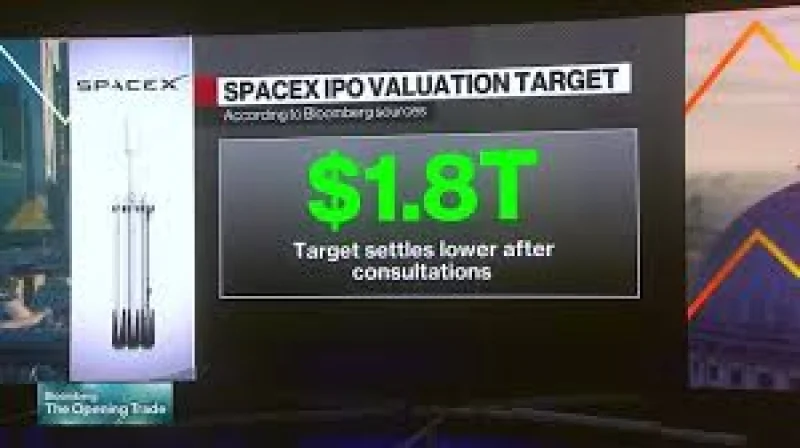
SpaceX is expected to go public on June 12, and the offering is being described as likely the largest IPO on record when it happens. The date has put the space sector back in the spotlight, with investors already looking past the headline event to the companies tied to satellite broadband and lunar infrastructure.
That attention matters because the space economy is still in its early growth phase, even by Wall Street standards. PwC projects the industry could reach $2 trillion by 2040, and the companies most often mentioned around the Space X Ipo window are not pure blue-sky names. They are operating businesses with customers, contracts and hardware already in orbit or on the launch pad.
AST SpaceMobile is one of them. The company provides direct-to-cellular broadband to cellphones and competes with SpaceX’s Starlink product, aiming to deliver full cellphone service that includes calling, texting, data and live video streaming. Its Block 2 BlueBird satellites are described as the largest commercial phased-array antennas ever deployed in low Earth orbit, and the company entered 2026 planning to deploy 45 to 60 satellites before year-end.
But one of the launch paths it was counting on hit a setback last month, when Blue Origin’s New Glenn deployed an AST SpaceMobile satellite too low in orbit, leaving it unusable. The company de-orbited the satellite and has had to lean on other launch partners, including SpaceX, to keep its rollout on track. Management still believes it can reach 45 satellites by the end of this year, with the next batch of three planned for sometime in June.
That mix of ambition and execution is what has kept investors interested. AST SpaceMobile already has 5.8 million global mobile subscribers and a $30 million contract with the Space Development Agency for tactical broadband. Intuitive Machines, meanwhile, is drawing its own share of attention after achieving the first U.S. lunar landing since 1972 and expanding beyond that milestone into aerospace and space infrastructure, including robotic landers, ground stations, satellites and related systems.
The company’s numbers have sharpened the case. Earlier this year, Intuitive Machines was awarded $429 million in new contracts and received a $180 million commercial lunar payload services contract from NASA. In the first quarter, it tripled revenue to $186.7 million and ended with a backlog of more than $1.1 billion, an $842 million increase from the end of last year. Management expects about 60% of that backlog to turn into revenue this year.
The friction in the story is that the space trade is still as dependent on launch reliability as it is on long-term vision. AST SpaceMobile can talk about satellite broadband at scale, but a single bad deployment showed how quickly a launch failure can disrupt the plan and shift business back toward whoever can get hardware into orbit on time. For now, June 12 is the date that concentrates the market’s attention, while the companies trying to build the rest of the space economy will spend the summer trying to prove they can keep up.
