


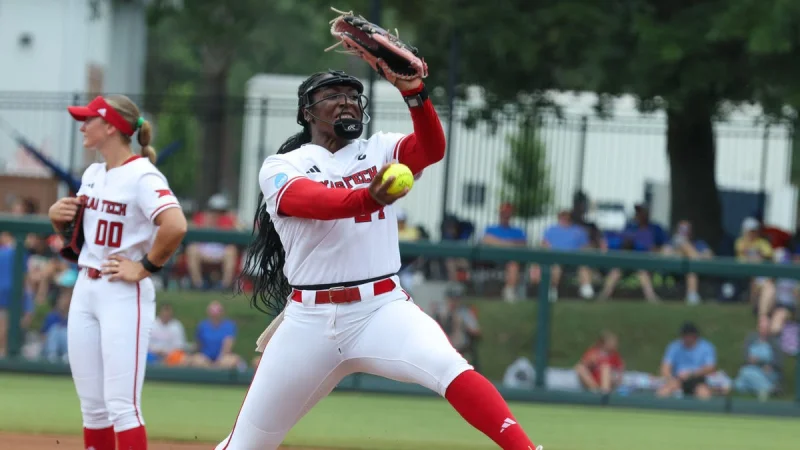
Eight teams are headed to Oklahoma City for the start of the Ncaa Softball World Series on Thursday, and the field carries both the expected heavyweights and two programs that forced their way in. Six of the top eight national seeds survived the postseason grind, but No. 11 Texas Tech and unseeded Mississippi State also earned their places in the final stage.
For readers looking for the clearest reason this bracket matters now, it is the clash between pedigree and momentum. Alabama enters as the No. 1 overall seed, Tennessee arrives with the nation's top pitching staff, and Texas is back after surviving a scare from Arizona State and comes in as the reigning national champion and SEC winner. That is the baseline in Oklahoma City: established powers, but not an empty bracket.
Texas Tech earned its spot by beating Florida in a hard-fought Super Regional, a result that kept the Red Raiders alive after a season that demanded they win tough games late. Mississippi State took a sharper path. The Bulldogs reached the Women’s College World Series for the first time by beating Saint Mary’s and Oregon to win the regional in Eugene, then stunned Oklahoma in Norman with a Game 3 shutout. Alyssa Faircloth was central to that run. She threw the first postseason no-hitter in Mississippi State program history against Oregon, struck out 10 batters in that game and followed it with 14 strikeouts against Saint Mary’s.
Mississippi State’s numbers help explain why it was able to do that. The Bulldogs entered with the nation’s eighth-best ERA at 2.29, and Delainey Everett added a complete-game shutout against Oklahoma in which she allowed three hits and three walks while striking out three. Mississippi State also put 11 runs on Oklahoma in Game 1 and scored six in Game 3, giving it enough offense to match a pitching staff that kept growing stronger as the tournament narrowed.
The twist is that the final eight did not all arrive by the same route, and that is what gives this week in Oklahoma City its edge. Arkansas stormed through the opening rounds with five straight run-rule wins, with four hitters batting above.535 in tournament play, while Nebraska leaned on Jordy Frahm and UCLA rode its big bats. The field still has six of the top eight national seeds, but the two teams outside that group are the ones that changed the shape of the bracket.
Texas also had to push through a full Super Regional to get here. The Longhorns lost Game 1 to Arizona State, trailed by one run heading into the sixth inning of Game 2, then won it on Victoria Hunter's two-run homer before closing the series with a 5-0 win in Game 3. Texas and Tennessee had not met since last year's WCWS, and that rematch now lands with Tennessee carrying a 1.35 ERA, 3.54 hits allowed per seven innings, 8.66 strikeouts per seven innings and a 3.54 strikeout-to-walk ratio. Karlyn Pickens, the No. 1 overall pick in this year's AUSL Draft, added 180 strikeouts this season.
That is the shape of the Women’s College World Series as it opens: a field led by seeded favorites, but one that now includes Texas Tech and Mississippi State because they kept winning when the bracket tightened. If Oklahoma City delivers another week like the one that got them here, the final stretch may belong as much to the teams that broke through as to the ones that were supposed to be there all along.
