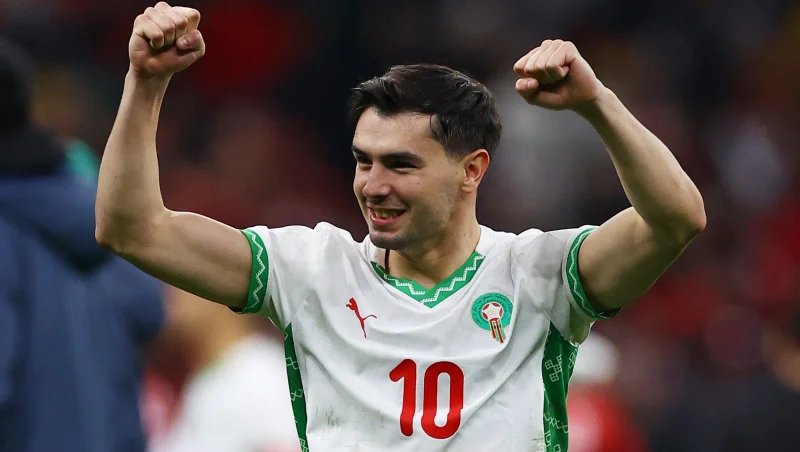
Morocco’s place in world football changed in Qatar World Cup 2022, when the team reached the semifinals and turned a one-off shock into a statement of arrival. What was once a side that too often exited the Africa Cup of Nations in the group stage and missed several straight World Cups is now inside the FIFA men’s top 10.
That is why Morocco remains a search term now. The 2022 run is no longer being read only as a tournament surprise, but as the moment a long national project began to look real: a system that now has Morocco as 2025 AFCON champions after Senegal were stripped of the title, 2025 Women’s Africa Cup of Nations finalists, 2025 FIFA Arab Cup champions, 2025 African Nations Championship winners, 2025 U-20 FIFA World Cup champions and 2025 U-17 AFCON champions. The senior men’s team’s bronze medal at the 2024 Olympic Games and the 2024 Futsal AFCON title only added to the sense that the breakthrough reached across age groups and formats.
Behind that surge, people around the Royal Moroccan Football Federation point to the same starting point: King Mohammed VI laid out the strategy at the Skhirat Sports Conference in 2008, setting out a long-term national project for football development. Since then, the system has leaned on governance reform, financial investment and what one source close to the federation described as competent human resources. Morocco created a national department for financial control, built thousands of local football pitches known as proximity fields, and made the Mohammed VI complex and academy in Maamoura, just outside Rabat, into a pipeline for talent. The academy has produced senior internationals including Nayef Aguerd, Azzedine Ounahi and Youssef En-Nesyri.
The rise has also been shaped by the players Morocco was able to bring in from abroad. FIFA rule changes opened the door to the country’s European-born diaspora, allowing Morocco to secure Hakim Ziyech, Nordin Amrabat and Brahim Diaz. The next wave may be even more striking. Ayyoub Bouaddi, an 18-year-old Lille midfielder, was the subject of reported interest from Zinedine Zidane’s side, which contacted his entourage to ask about keeping him with France. “I don’t think we’ve ever had a player that young and with that much promise declare for Morocco,” Tom Yousef Drissi said.
There is still a wrinkle in the story of Morocco’s ascent. The success is presented as the product of careful planning, yet there has also been upheaval in the build-up to the World Cup, a reminder that the path from blueprint to results has not been smooth. Even so, Morocco’s current standing suggests the bigger question is no longer whether the country belongs among football’s leading sides. It is how much further a system built over nearly two decades can still go.