


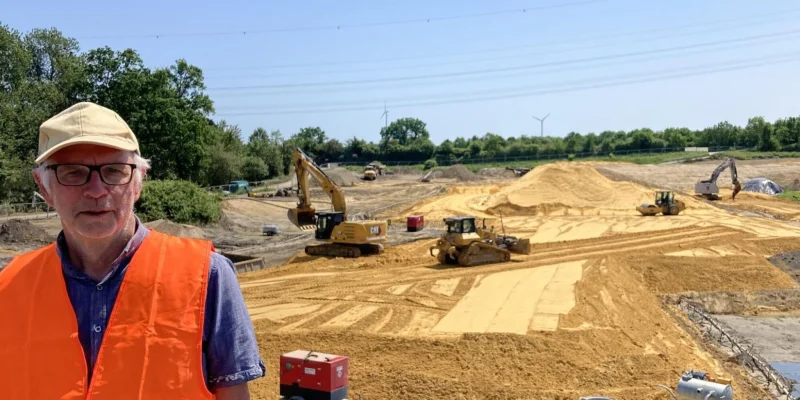
The Lippeverband’s Genossenschaftsrat met in Essen this week to review current projects for the Lippe region, with the HaLiMa flood-control and renaturation scheme in Haltern-Lippramsdorf and Marl still at the center of the work. It is the association’s largest construction project, and the next phase is already moving toward the first major milestone in 2026.
Michael Kalthoff linked the project directly to the weather patterns people are already seeing. He said rising numbers of extreme weather events are making flood protection more important, and that the dike rebuild in Marler and Haltern-Lippramsdorf is meant to serve both flood safety and nature protection. For residents along the Lippe, that is not an abstract policy goal. It is a concrete response to a river that has to carry more water, more often, while still leaving space for ecology.
The meeting in the association’s Essen headquarters also underlined the scale of the Lippeverband’s broader plans. The organization is planning annual investments averaging 150 million euros as it pushes ahead with measures for a blaugrüne Zukunft in the Lippe region. HaLiMa fits into that strategy through the program Lebendige Lippe on behalf of North Rhine-Westphalia, with the aim of giving the river significantly more room by moving dikes farther inland.
Most of the work in the Nordaue section is already visible. By the end of 2025, the dikes there had been completed over 3.7 kilometers, and the Lippeverband had created a 42-hectare floodplain area. The new dike paths were opened to the public, turning a long-running civil engineering project into something people can now walk through and see.
But the project is not finished, and that matters. The Südaue remains under construction as the last section, with a new dike body being built over around 500 meters and another 18 hectares of floodplain area being created. The project is meant to deliver around three million cubic meters of additional retention volume, yet the final stretch will not be completed until the end of 2027. That means the flood and nature benefits praised in Essen are still being built, not yet fully delivered.
HaLiMa has been under way for more than ten years and is financed by North Rhine-Westphalia and RAG Aktiengesellschaft, with total construction costs of 95 million euros. RAG is covering two thirds of the bill and the state one third. The first construction phase, including the Lippe-Balkon, is planned for autumn 2026. For now, the message from Essen is clear: the Lippeverband is still building the room the Lippe needs, but the hardest part of the work is not over yet.
