


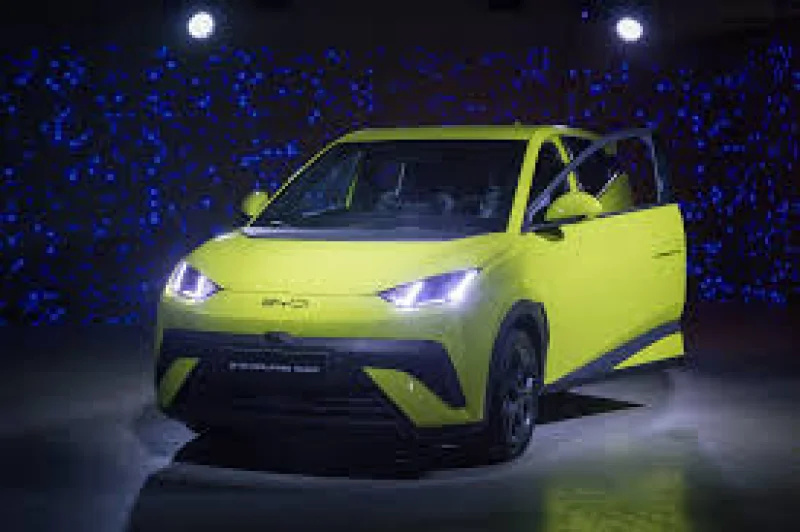
Byd Company unveiled its Xuanji A3 chip on May 28, calling it China’s first self-developed 4nm high-end intelligent driving chip and placing the company’s chip push squarely on the road, not just on the slide deck. The chip has already entered the vehicle-installation stage and will be gradually fitted into vehicles in the second half of this year.
The timing matters because Byd Company is not making this bet from a position of comfort. In Q1, its net profit for the quarter posted a rare sequential decline, while the company has been dealing with pressure on automotive gross margins as the price war cuts deeper and heavy spending on overseas expansion and intelligentization keeps draining cash. Its operating cash flow has also narrowed significantly as it pours money into phased heavy-asset expansion.
Wang Chuanfu, who stood on stage to release the chip, tried to frame the technical leap in plain industrial terms. He said a 4nm automotive-grade chip is equivalent to a 2nm chip in consumer electronics, a comparison meant to underline how demanding the automotive environment is. BYD said the Xuanji A3 belongs to a broader chip stack with a total computing power of more than 2100 TOPS, a figure that puts the company’s ambitions well beyond a single component launch.
The chip also reflects how far BYD has pushed its internal manufacturing chain. The company says it has more than 7,000 people on chip R&D, has invested more than 100 billion yuan cumulatively, and operates four chip R&D bases and five wafer fabs. It says all seven links, from product definition and architecture design to circuit design, wafer manufacturing, packaging and testing, are handled in-house. Wang called BYD the only global automaker with full-process and full-link manufacturing capabilities for chips.
That claim lands at a moment when the industry’s old shortcuts have become harder to lean on. BYD’s blade batteries and supply-chain advantages are no longer the kind of moat they once were, and the company is trying to build a new one in chips and AI as the market shifts around it. The unresolved question is not whether the Xuanji A3 exists, but how quickly BYD can turn a high-profile release into a broad in-car rollout once the second half of the year begins.
