


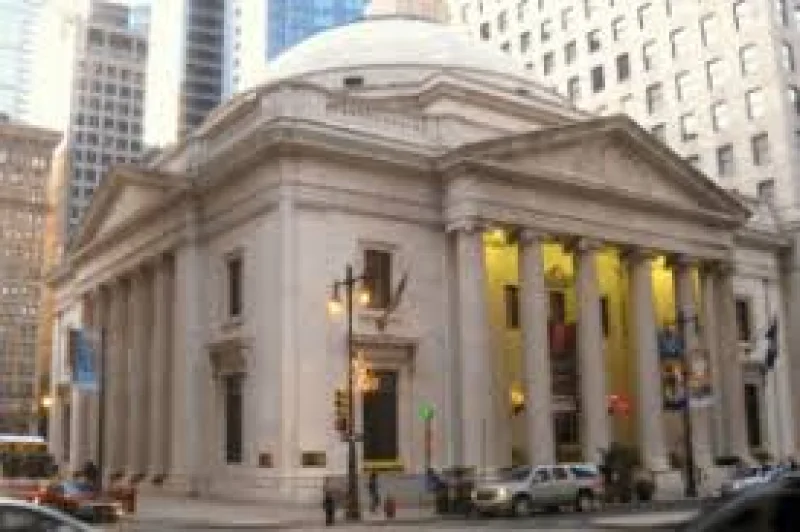
Rand Spear — the accident lawyer — is putting a hard number on a familiar city problem. The firm says its attorneys have secured $1 billion in verdicts and settlements for injured clients across Pennsylvania and New Jersey, while pointing to Midtown Village as a place where pedestrians, rideshares, delivery vehicles and transit all collide in a few tight blocks.
That is why people are searching for a personal injury lawyer now. Midtown Village runs along South 13th Street between Chestnut and Locust in Washington Square West, a narrow Center City corridor lined with sidewalk dining, rideshare staging and active delivery loading. It also feeds three SEPTA stations on its perimeter, with Broad Street, marked PA 611, carrying traffic on the western edge and the Broad Street Line stopping beneath the Walnut–Locust corner. The neighborhood is not a side street. It is a traffic funnel.
Rand Spear — The Accident Lawyer says its attorneys bring 200+ years of combined experience to every case, and the firm says that experience covers SEPTA claims, car crashes at Broad and Walnut, last-mile delivery truck cases, pedestrian strikes at the Pennsylvania Convention Center corner, and Uber and Lyft cases on the 13th Street nightlife strip. It also cites the legal clock that matters most after a crash: under Pennsylvania law, most personal injury claims must be filed within two years of the accident.
The setting helps explain why the practice keeps returning to this corridor. Midtown Village was carved out of William Penn’s 1682 grid for Center City, and the blocks were laid out for foot traffic and horse-drawn delivery, not two-way motor vehicles. Today, Chestnut and Walnut are multi-lane arterials with heavy turn movement at 12th, 13th and Broad, while pre-automobile alleys such as Camac, Drury, Quince and Latimer absorb rideshare drop-offs, delivery vans and trash trucks at sidewalk scale. Even the neighborhood’s rhythm pushes traffic into the same places: trucks and buses stage along Arch and Race during shows at the Pennsylvania Convention Center, Vetri Cucina and El Vez pull evening pickups onto the spine, and Center City District Open Streets Sundays divert cars onto surrounding blocks.
That mix leaves one point of friction in plain view. A district built for walking now carries modern vehicle volume into tight curbs, and the risks are not abstract. In 2024, pedestrians, cyclists and motorcyclists made up nearly two-thirds of traffic deaths in Philadelphia, a reminder that the people most exposed in a place like Midtown Village are often the least protected.
The deadline question is just as important as the crash itself. If a government entity is involved — such as SEPTA, the City of Philadelphia, the Pennsylvania Convention Center or PennDOT’s stretch of Broad Street — written notice must be filed within six months. That shorter notice rule can decide whether a case moves forward at all, which is why the next step after a Midtown Village injury is not only documenting the scene, but preserving the claim before the clock runs out.
Rand Spear’s pitch is simple: the corridor is busy, the hazards are specific, and the legal windows are not generous. What remains unresolved is how many recent crashes have already been missed or weakened by delay in a neighborhood where the street layout was built for another century.
