


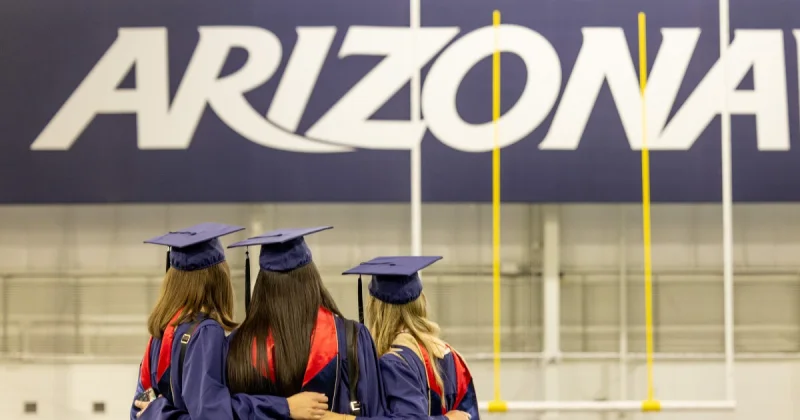
The University of Arizona’s first-year class for fall 2025 is about 20% smaller than the year before, a deliberate reduction that university officials say is meant to reshape who arrives in Tucson and who stays long enough to graduate.
Kate Hidalgo Bellows, who traveled to Tucson and reported from there, said the change stood out because it was not just a one-off admissions dip. “Well, it’s important to keep in mind that it was just for this past class,” she said, underscoring that the smaller intake applies to the incoming class now headed for campus.
Officials said the university cut back the amount of tuition discounts it offered out-of-state students, after years of giving out a lot of merit aid. That shift, they said, made the school’s offer less appealing to some applicants, and they saw the results in the size of the class. They also said they wanted a more prepared group of students, one more likely to graduate and remain enrolled at higher rates. Arizona students finish at lower rates than peers at mostly state universities in the Midwest and Southwest, which has long been a concern for the school.
The move also comes after the university had been in a $177 million budget hole. Cutting some admissions recruiters was part of the effort to reduce costs, and Bellows said that is where the story becomes less tidy. “Yes, that surprised me,” she said when asked about the size of the drop, and she added that she looked closely at whether the change could really be explained only by policy. The university says the smaller class is intentional, but Bellows said it also seemed to reflect broader forces, including a demographic decline that leaves fewer high school students graduating and moving on to college, along with the recruiter cuts.
More recently, the university updated its admissions process in ways that resemble what some more elite universities do, including adding an early action deadline. That suggests the school is not simply shrinking a class for one year, but trying to change the mix of students it attracts and the way it competes for them. “That seems to be the goal,” Bellows said of the university’s approach.
For now, the clearest answer is that the fall 2025 class was intentionally smaller, but not entirely for one reason. The unanswered question is how much of that 20% drop came from design and how much came from the colder admissions climate around it, a mix of cost pressure, fewer discounts and a smaller pool of college-bound students.
