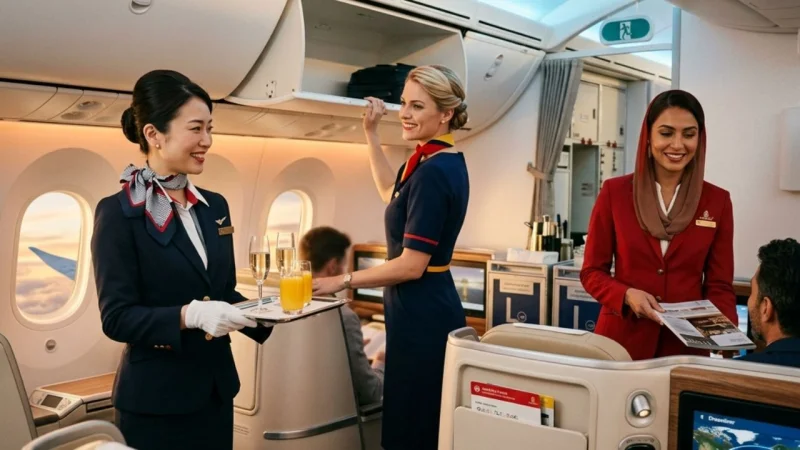
The global aviation industry will officially pause on May 31, 2026, to mark Flight Attendants’ Day, a recognition that lands while airlines are still grappling with delays, cancellations and terminal gridlock. For passengers, the date is a nod to the people who keep cabins calm when the system around them starts to buckle.
That is why the search interest around Flight Attendant is not just about a date on the calendar. It is about the work that cabin crews do every day inside a strained travel network: helping passengers through disruptions, protecting safety, and absorbing the first shock when operations go wrong. Flight attendants are often the last steady hand in a long day of missed connections and crowded gates.
They do that work under punishing conditions. The article describes long shifts, demanding schedules and 14-hour workdays, along with rigorous certification programs that continue throughout their careers. Cabin crews are trained to handle medical emergencies, severe turbulence and rapid evacuations, which is why they are treated as more than hospitality staff. They are the final line of defense against operational collapse.
That role has become more visible as global aviation continues to be battered by weather events, scheduling breakdowns, radar failures and major weather groundings. When departures stall and terminals fill, flight attendants are the people passengers see managing the pressure in real time. They shield travelers from the harshest parts of modern air travel while keeping safety procedures in place.
The contradiction is hard to miss: the same industry that depends on flight attendants to steady the system is also the one repeatedly pushing them into the middle of crisis conditions. A flight crew can do everything right and still spend hours working through a cascade of delays that starts far from the cabin. In moments like those, their value is not abstract. It is the difference between disorder and control.
May 31, 2026 is the day the industry gives that work a formal spotlight, even if the article does not spell out how airlines or airports will observe it. What is clear is that the recognition comes with a blunt reminder: as long as aviation keeps running into delays, cancellations and gridlock, the flight attendant remains one of the few constants passengers can count on.