


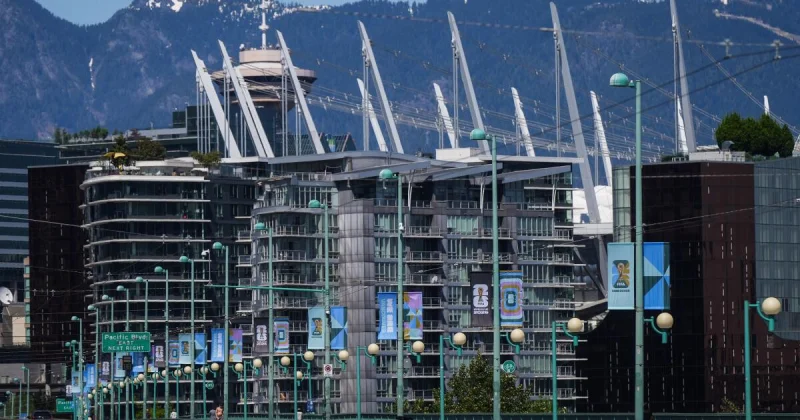
Toronto and Vancouver will host 13 World Cup matches in Canada, putting the country’s biggest cities at the center of the tournament’s North American return. Canada’s opening ceremony is scheduled for June 12 in Toronto, before the national team begins its home campaign against Bosnia and Herzegovina.
That is why Marcelo Flores is drawing attention now: the calendar has become real, and so has the scale of what Canada is taking on. Canada will play all three of its Group B matches at home, meeting Qatar on June 18 in Vancouver and Switzerland on June 24 in the same city, with the event meant to arrive as a national celebration as much as a sporting one.
Peter Augruso tried to frame it that way at a recent FIFA Congress in Vancouver. “El fútbol les pertenece a todos. No pregunta de dónde vienes, solo cómo juegas, cómo lideras y cómo reúnes a la gente,” he said, adding later that “Nuestra diversidad no nos ha diluido. Nos ha definido.” His argument was simple: soccer in Canada is supposed to look like the country itself.
Richie Laryea said the buzz is already spilling into ordinary moments. “Cuando sales a tomar un café o incluso dentro y alrededor del hotel, la gente está emocionada,” he said, and added that people are “ansiosa por el Mundial en Toronto,” predicting the scale of the moment will only sink in when fans see it for themselves. The optimism, though, comes with a hard bill attached. A Canadian government watchdog has estimated the tournament will cost federal and local governments 1.000 millones de dólares, and the event has already drawn criticism over ticket prices, public spending and worries about its impact on marginalized communities.
The tournament also carries a wider political edge. Canada played at the World Cup in 1986 and again in 2022, but has never advanced beyond the group stage, which makes these home matches feel like a chance to reset the country’s place in the sport. At the same time, the national team has moved its training camp from Arizona to Tijuana, Mexico, as the U.S. side of the tournament is complicated by travel restrictions imposed by the Trump government on visitors from countries including Iran, Haiti, Ivory Coast and Senegal. For Canada, the next milestone is fixed: June 12 in Toronto, then two more Group B games in Vancouver, with the promise of a packed stadium and the question of who pays for the spectacle still hanging in the background.
