


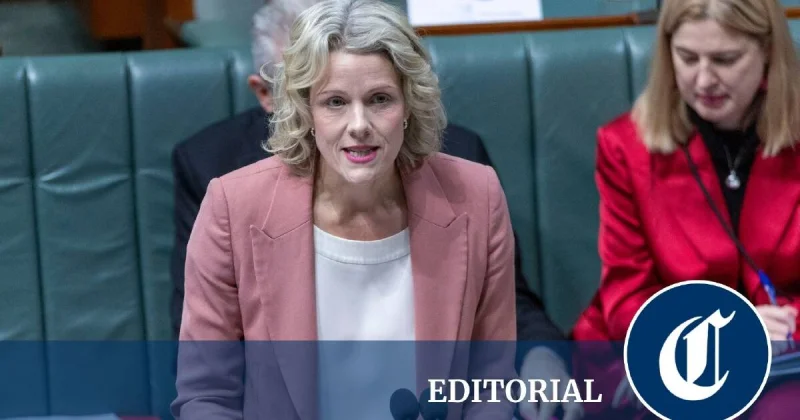
Federal Housing Minister Clare O'Neil used a National Press Club speech this week to argue that Australia’s housing system is broken and that prefabricated homes could be part of the fix. She said governments have not done enough to fairly house Australians for decades, and that there is no single silver bullet that will solve a crisis built up over a generation.
That message landed while the government is still trying to hit its target of 1.2 million homes by 2029, a goal that is already 77,000 behind and moving at a pace the article describes as 30 per cent slower than needed. For home buyers locked out of the market and renters facing tighter conditions, the timing matters because the gap is not theoretical; it is growing now, and every month of delay makes the target harder to reach.
O'Neil’s pitch was not that prefab housing alone can repair the system, but that it may be the missing piece in a country that still builds nearly half as many homes per person as it did after World War II. She pointed to a construction model that has become mainstream elsewhere, noting that prefab makes up the majority of new house builds in Sweden. In her view, faster building methods need to sit alongside a broader rethink of how homes are approved, funded and delivered.
The scale of the problem helps explain why that argument is gaining attention. Australia’s housing system is being described as broken not just because of prices, but because regulation across three levels of government has become dysfunctional, trades are in short supply and the system takes too long to get homes out of the ground. Builders have been warning that without coordinated action, the 1.2 million-home promise will remain out of reach, and the Housing Industry Association has pressed for a “use it or lose it” approach to funding.
That leaves the government with a familiar but uncomfortable choice. It can keep talking about speed while the target slips further behind, or it can do the harder work of cutting paperwork, streamlining approvals and forcing different layers of government to move together. O'Neil’s speech showed where Canberra wants the debate to go. Whether the machinery of government can move fast enough to match it is the question that now matters.
