


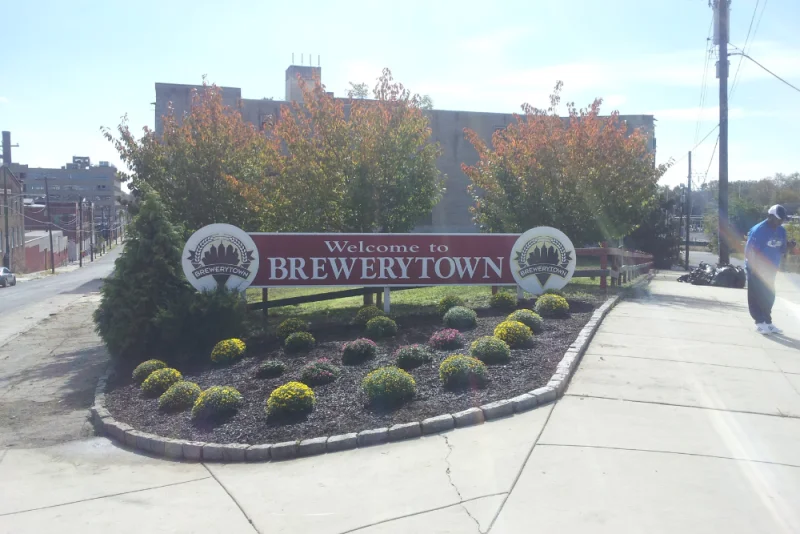
SEPTA brought Route 15 trolley service back to West Girard Avenue in June 2024 after a four-year shutdown, and Brewerytown has been living with the change ever since. The restored G1 line runs through a corridor where embedded rail, loading islands and tight curb space still shape how drivers, cyclists and passengers move.
That matters now because Brewerytown is not just a transit street. West Girard Avenue forms the neighborhood’s southern edge, and the same blocks hold 19th-century row houses, former brewery buildings and new construction, all packed into a dense stretch between Fairmount Park and Temple University. For anyone searching for a car accident lawyer after a crash there, the setup is part of the case before a claim is even filed.
The rail itself is part of the risk. SEPTA owns the tracks, and the rut they leave in the pavement can catch bicycle wheels or pull at a car’s steering after rain. At 29th, 30th and 31st Streets, trolley loading islands sit in the cartway and force right-turning drivers into a tighter arc onto the platform, creating the kind of right-hook crash that can involve a cyclist or a trolley passenger. In that setting, fault can be shared among the turning driver, SEPTA as the loading-island operator and the city as the roadway maintainer.
That mix of old street design and active rail is part of Brewerytown’s redevelopment story. Developers have spent the 2010s and 2020s turning brewery shells into apartments, including the Brewery Row conversion at 1229–1247 North 27th Street and the Poth Brewery complex at 31st and Jefferson, while the Bergdoll buildings remain in active construction phasing. But the corridor has not been simplified by that renewal. The embedded track, the islands and the narrow turning space remain in place, which is why the liability questions did not disappear when the trolley returned.
The legal clock also runs fast. Claims against SEPTA can trigger Pennsylvania’s six-month written notice rule, a deadline that moves faster than the two-year statute of limitations and can decide whether an injured person has a claim at all. If a park-edge sidewalk or curb cut is involved, Philadelphia Parks & Recreation can enter the picture on a separate notice track, and delivery traffic to Aldi at 3101 West Girard adds another layer, with larger grocery-delivery trucks falling under federal motor-carrier rules and smaller couriers under state rideshare rules.
Brewerytown’s civic groups have been tracking the pressure points on the street for the city, including the Brewerytown Sharswood Community Civic Association and the Greater Brewerytown CDC. North 33rd Street, along the Fairmount Park frontage between Cecil B. Moore and West Girard, adds its own hazard pattern, with widely spaced signals that encourage speed-differential crashes on the stretches between lights. The result is a neighborhood where a restored trolley line, not a new one, now sits at the center of the next crash claim, and the first deadline may arrive before the case is even understood.
