


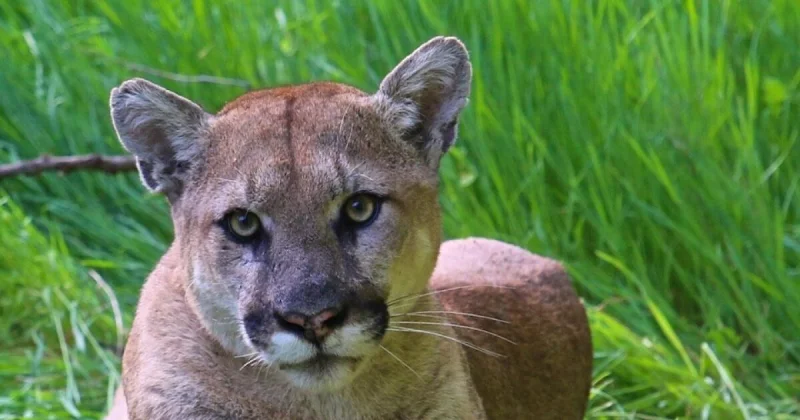
A mountain lion was found relaxing in the backyard of a home in Santa Monica’s 700 block of 14th Street on Friday, sending police into a residential neighborhood and drawing state wildlife officials to the scene just before noon. Officers urged people nearby to stay indoors, keep pets inside and avoid trying to approach or photograph the animal.
The home sits just north of Montana Avenue, in a part of the city where a mountain lion sighting is unusual enough to trigger a fast response. Anyone who saw the animal was told to call 911 from a safe location, while the California Department of Fish and Wildlife worked with local officers to safely remove it. Photographs of the lion showed it appeared to be in good health, but that did not change the advice to residents: stay inside and keep pets out of reach.
The sighting matters because it came in a place where mountain lions rarely linger. The last one seen in Santa Monica was in 2012, when a lion turned up on the Promenade, tried to escape before it could be tranquilized and was killed. Friday’s animal was found in a backyard instead of a trail or hillside, a reminder that even a healthy lion in a city neighborhood can turn into a public-safety problem in minutes.
That caution is rooted in what researchers have learned about the local population. National Park Service researchers have recorded more than 250,000 GPS points while tracking lions in the region, and their work shows the animals strongly avoid humans and rarely enter developed areas. Adult males average a territory of roughly 144 square miles, females about 52 square miles, and only a handful of lions have documented crossings of the 101 Freeway since 2002, even though the road has served as a near-impenetrable barrier for movement.
The population itself is small and under pressure. Researchers estimate 10 to 15 adult and subadult mountain lions inhabit the Santa Monica Mountains and surrounding areas, and the leading causes of death include vehicle strikes, rodenticide poisoning and intraspecific conflict. More than 32 local mountain lions have been documented as vehicle strike deaths since 2002, and 28 of 29 tested lions returned positive results for rodenticide poisoning. Those numbers help explain why crews moved quickly on Friday even though the lion looked healthy.
The broader conservation picture has only sharpened the stakes. One mountain lion, P-22, crossed both the 101 and the 405 to reach Griffith Park and lived in a roughly 9-square-mile range there before he was euthanized in December 2022 after injuries from a vehicle strike and attacks on small dogs. The 2018 Woolsey Fire also burned nearly 100,000 acres, destroyed roughly half of available lion habitat and about 88% of NPS parkland in the area, and killed two collared lions, including P-64. In that context, the sighting on 14th Street was both a rare urban intrusion and a sign of how tightly the local lions are being squeezed.
For now, the immediate question is whether the mountain lion was removed safely and where it went after state wildlife officials arrived. Authorities had the animal contained in a neighborhood where residents were told to stay inside, and the response on Friday was built around one simple goal: keep people and pets away until the lion was clear of the backyard and out of Santa Monica.
