


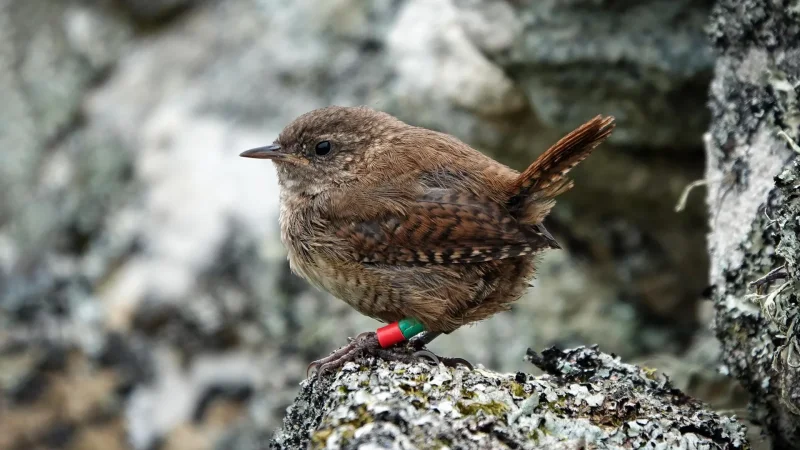
St Kilda’s wrens have been found weighing 13 to 16 grams, more than twice the size of the smallest mainland Britain birds, in a study that suggests the remote island population is evolving on its own track. Dr. Michał Jezierski led the research, which compared island birds with mainland wrens and found the St Kilda birds stand apart in both body size and genetics.
The study was published in the Evolutionary Journal of the Linnean Society and examined four Scottish island subspecies: Shetland, Fair Isle, the Outer Hebrides and St Kilda. Researchers used body measurements, song recordings and whole genome sequencing, and the result was clear enough to sharpen a long-running question about how isolated island animals change when cut off from larger populations.
Mainland Britain wrens usually weigh 7 to 10 grams, making the St Kilda birds a striking outlier. The biggest island birds in the study sit in the top 25% of known cases of island gigantism in birds, a pattern seen when animals isolated on islands grow much larger than their mainland relatives. Jezierski said all four Scottish subspecies are genetically distinct from mainland Britain wrens, and that the Shetland and St Kilda birds are especially distinct in both appearance and song.
That last point matters because the birds can look similar even when their genomes tell a different story. The analysis found little evidence that wrens from Shetland and St Kilda regularly interbreed with mainland populations, and the study said each island population is genetically distinct and largely isolated from the others. In other words, the physical resemblance across the islands hides a deeper separation that the songs and genomes reveal.
Researchers framed the work as evolution in action on remote Scottish islands, where isolation, lower predator pressure and limited competition can push species in unusual directions. Island syndromes often include larger body size, longer lifespans, slower reproduction and reduced flight ability in birds, and the wren study adds a detailed case from Scotland to that pattern. Will Smith, who also worked on the research, said islands with similar environments can produce similar outcomes through different genetic pathways, making Scotland’s wrens a useful case study for how island biodiversity forms worldwide.
The open question is whether the St Kilda birds will eventually be formally recognized as a new species. The study does not settle that, but it does make the path easier to see: the birds are unusually large, highly distinct and not mixing much with mainland wrens. For now, St Kilda looks less like a footnote on the edge of Britain and more like a place where new species may already be taking shape.
