


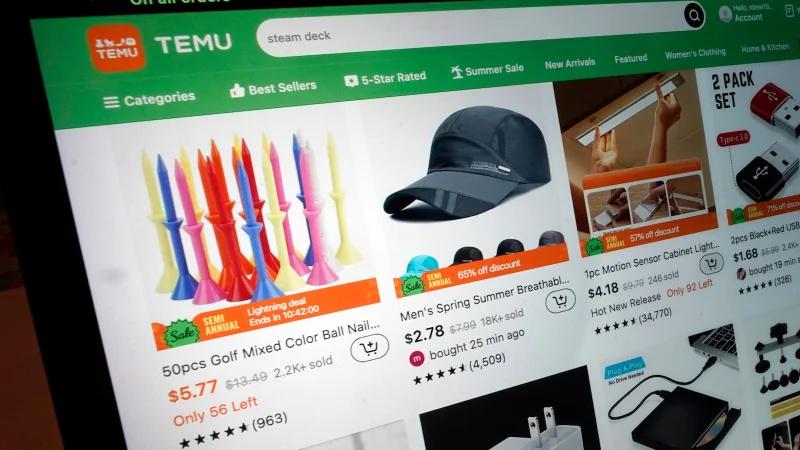
European Union regulators fined Temu 200 million euro ($232 million) on Thursday, saying the fast-growing marketplace failed to identify, analyze and assess the systemic risks of illegal goods sold on its platform.
The European Commission said the case was not about a few bad listings. In a mystery shopping exercise, investigators found non-compliant products, including electronic device chargers that failed basic safety tests. They also found a very high percentage of baby toys that posed safety risks because they contained chemicals above safety limits or had parts that could come off and create a suffocation risk.
Henna Virkunnen, the commission’s tech chief, said risk checks are “not box-ticking exercises,” and said Temu’s assessment “underestimates concrete risks, lacks specificity, is not grounded in solid evidence, and is not comprehensive.” She added that it leaves “regulators, users, and the public in the dark about the true scale of potential harm posed by illegal products sold on Temu” and that “it is time for Temu to comply with the law.”

Temu, which is owned by PDD Holdings Inc. and has 92 million users in the EU, said it disagreed with the decision and considered the fine disproportionate. The company said the ruling related to the commission’s first DSA evaluation of Temu in 2024 and did not reflect the current state of its systems. Temu said it had “engaged constructively with the Commission throughout the process and has since taken further steps to strengthen risk assessment, platform governance, and user protection.”
The 27-nation bloc said failing to do proper risk assessments is a particularly serious breach of its digital rules. The penalty was issued under the three-year-old Digital Services Act, which requires online platforms to do more to keep users safe from harmful content or dodgy goods. It is only the second time Brussels has issued a fine under the law, after a $120 million penalty last year for Elon Musk’s social media site X.
The decision is not the end of the fight. Temu has until the end of August to submit an action plan to remedy the problem, and regulators warned it could face additional daily, weekly or monthly fines if it fails to comply. For a company built on cheap goods shipped from sellers in China, the message from Brussels was blunt: clean up the platform or pay more.
