


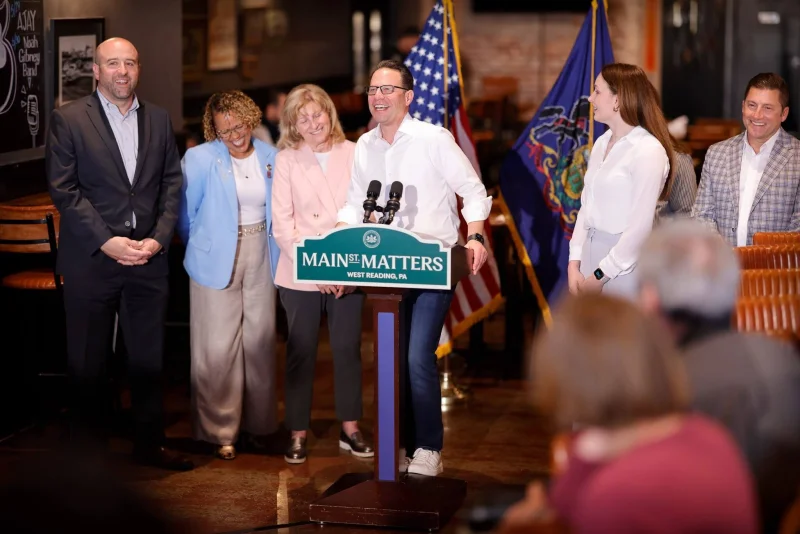
Governor Josh Shapiro announced $17.2 million in funding Tuesday for 56 community projects across Pennsylvania, using a downtown revival program his administration says is helping small businesses and local economies hold their ground. He made the announcement in West Reading after a walking tour of local businesses with state officials.
The largest round of grants in the latest Main Street Matters cycle drew more than 220 applications seeking more than $68 million, underscoring demand that far outstripped the money available. Among the awards, the West Reading Community Revitalization Foundation will receive $60,000 to make façade improvements along Penn Avenue.
Shapiro said every community in Pennsylvania, whether rural, suburban or urban, depends on a strong Main Street to support local businesses, create jobs and bring people together. He called Main Streets the beating heart of communities and said his administration is making their success a priority. Secretary of Community and Economic Development Rick Siger echoed that view, saying the program exists because healthy main streets are essential to strong communities.
Main Street Matters is administered by the Pennsylvania Department of Community and Economic Development and is a key part of the Shapiro administration’s 10-year Economic Development Strategy. Since Shapiro created the program in fiscal 2024, more than $34 million has been awarded to 137 projects across the Commonwealth. Since taking office, he has secured $40 million for the program and is asking lawmakers for another $20 million in his 2026-2027 budget proposal.
The West Reading announcement followed stops at Simply Bold Cafe, Holistic Skate Shop, Symbiote Collectibles and the West Reading Motor Club, where the governor and Siger were shown what the grants are meant to support. West Reading Mayor Samantha Kaag said Main Streets are places where communities build identity, pride and possibility, and added that the funding reaches the people behind the storefronts, the workers earning paychecks and the families deciding where to spend their weekends. The question now is not whether the program has buyers; it is whether the state keeps pace with the demand it just documented.
