


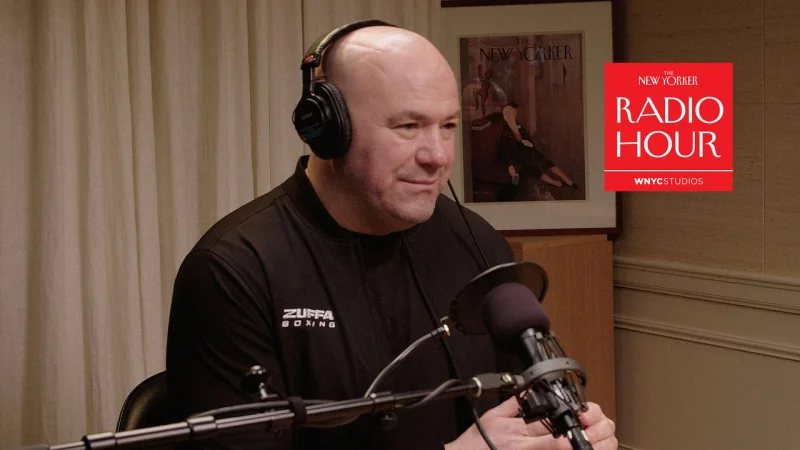
The White House is preparing to host a full card of mixed-martial-arts brawls on the South Lawn next month, an event planned to mark the American republic’s two-hundred-and-fiftieth anniversary and the eightieth birthday of President Donald Trump. Weigh-ins are set for the Lincoln Memorial, turning two of Washington’s most recognizable landmarks into the backdrop for a night of combat sports that would have been unthinkable a generation ago.
Trump first announced the event nearly a year ago at the Iowa State Fairgrounds, and the man now helping bring it together is Dana White, the chief executive of the Ultimate Fighting Championship and one of the president’s close friends and supporters. White, 56, had just finished dinner with Trump when he spoke with The New Yorker Radio Hour and called him “one of a kind,” a phrase that fits a relationship built as much on loyalty as on spectacle.
White has spent years turning the UFC into one of the most profitable brands in modern sports. The organization’s fights unfold inside a fenced-in octagon, brief bursts of violence that end when a referee sees a fighter in danger. That product helped make the UFC a fixture in vast arenas and on streaming services, and it helped make White rich. He is reportedly worth as much as half a billion dollars and still draws a $20 million salary to run the show.
The path to that fortune began in 2001, when the Fertitta brothers bought the UFC for $2 million and made White their front man. Fifteen years later, in 2016, the Fertittas and their partners sold the promotion to a consortium led by WME-IMG for $4 billion, a deal that showed how far the sport had traveled from the margins to the mainstream. White also carries the kind of biography that fits the hard-scrabble image he has long projected: he moved to Las Vegas in fifth grade.
That history matters because the White House card is not just another fight night. It places the UFC at the center of a patriotic celebration, with the president’s birthday folded into the same spectacle as the nation’s anniversary. For White, it is another example of a promoter who has spent decades selling violence as entertainment and somehow ended up with the most famous venue in American politics as his stage.
The oddity is hard to miss. A sport known for blood, cages and referees stepping in at the edge of injury is headed for the South Lawn, with weigh-ins at the Lincoln Memorial and the president himself celebrating in the same season. For Trump, the event is a display of pageantry and populist theater. For White, it is the latest and most visible sign that the ultimate fighting championship has moved from a niche fight circuit into the national center of gravity.
