


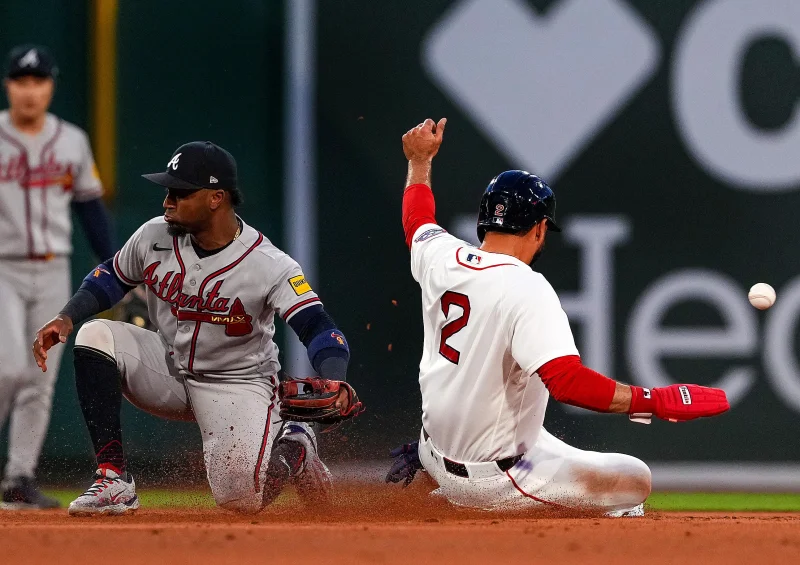
BOSTON — The Braves sent Bryce Elder to the mound Tuesday at Fenway Park and beat the Red Sox 7-6, extending their road surge while Boston’s home struggles deepened. Elder, who came in 4-2 with a 1.97 ERA, got the ball as Atlanta tried to keep pace with the best start in baseball.
The right-hander had not been sharp against Boston before, entering the game 0-2 with a 4.05 ERA in two career starts against the Red Sox. This time, the Braves backed him with the kind of form that has carried them through the spring: they had won four straight on the road, were 20-8 away from home and had gone 17-5 against left-handed starters while going 10-2 in May.
Atlanta arrived at 37-18, 19 games above.500 and looking every bit like the league’s most complete club. Boston, meanwhile, came in 22-31 and left 8-18 at home after another loss at Fenway, where the Red Sox had dropped four in a row.
The numbers explain why this game mattered beyond one night. The Braves were 5 hits shy of nothing by then; they were the team that kept winning on the road, kept handling lefties and kept stacking results. Elder’s line in the season — 4-2 with a 1.97 ERA — showed why Atlanta was willing to hand him the assignment against a Boston club that had already seen him twice.
For the Red Sox, the defeat landed in a rough stretch that has pushed them nine games under.500 for the first time since 2022. They had also stranded the potential tying run in scoring position in the final frame for three straight games, a sign that the margins at Fenway were getting smaller even as the losses kept piling up.
There was recent history between these clubs, too. On May 15, Connelly Early allowed two runs on five hits in five innings in a 3-2 loss at Atlanta, a reminder that the matchup had already turned tight once this month. Two weeks later, the Braves were back at it, and Elder was again at the center of the story.
That is the tension in both dugouts now. Atlanta keeps looking like a club built to win in different ways, with pitching, travel and matchup flexibility all pointing in the same direction. Boston keeps getting close enough to make the ending matter, then leaving with another loss and another missed chance to steady a season that is slipping away at home.
For the Braves, the next question is less about whether they can stay hot than whether anyone can slow them when they leave home. For Boston, it is whether a lineup that keeps putting runners in position can finally turn those chances into the win it needs before the standings get any harder to climb.
