Synergy says the shutdown of two Esperance wind farms ended up costing far less than expected after it sold turbines for re-use and brought in a local contractor that undercut the other bids by about $1 million. Kathleen Hammond said this week the work on the old turbines had finished and the utility was now explaining how the decommissioning was carried out.
The savings came from choices that were built into the end-of-life plan from the start. Synergy began the process in 2022 after repowering was ruled out and the old plants were headed for retirement. It sold the six younger turbines from the Nine Mile Beach section to Blair Fox, a family-owned electricity company, for a nominal fee, and the majority of the remaining turbines went to another company that planned to refurbish and reinstall them. Two turbines were donated to TAFE, the Learning Academy in WA, for clean energy skills development.
Hammond told the Australian Wind Energy Forum in Melbourne that the local contractor was one of the main reasons the project landed under budget. She said the company came in about $1 million cheaper than the other two quotes Synergy received, and that reusing turbines rather than sending everything to landfill delivered another major saving. Synergy had provisioned for straight disposal, she said, so the refurbished equipment created what the utility described as significant deviations from its original estimates.
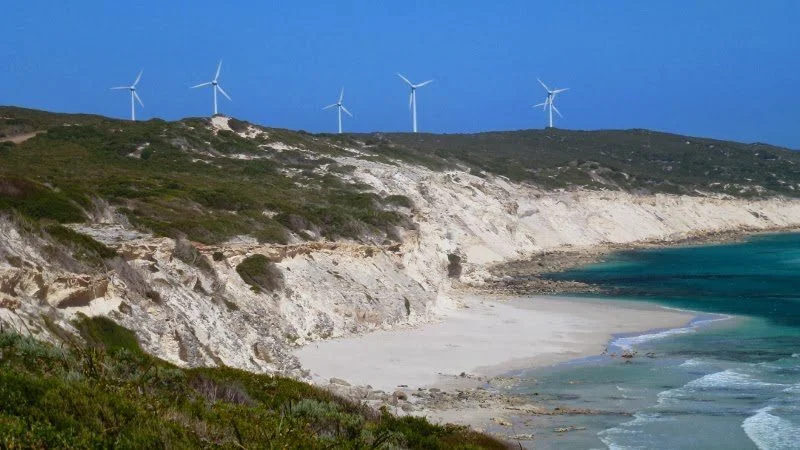
The Esperance work covered a site with a long history and an unusual set of constraints. The wind farms sit inside a natural reserve and were among Australia’s oldest operating wind assets, with the nine-turbine Ten Mile Lagoon project commissioned in 1993 and six turbines added at Nine Mile Beach in 2004. Together they produced 5 megawatts. Nearby Salmon Beach, commissioned in 1987, was Australia’s first ever commercial wind project.
Because the turbines were built in a protected area, Synergy had to submit a decommissioning and rehabilitation plan to the state Environmental Protection Authority before work could start. That plan was split into three phases: removing the turbines, taking out underground cabling and other materials, and rehabilitating the site. In 2024, Synergy said the road bases and concrete foundations would be gifted to the Shire of Esperance for use as road surfaces and other purposes, but the bases were ultimately left in place to avoid erosion and help native revegetation.
The project now matters well beyond Esperance because it offers a working example of how old turbines can be handled at lower cost than simple demolition. Australia faces about 5 gigawatts of wind capacity expected to reach end of life in the next 10 years, and the Esperance cleanup suggests reuse, local contracting and site-specific rehabilitation can change the bill as much as the machinery itself. For Hammond, the lesson is already clear: the cheapest ending was not the one Synergy first budgeted for, but the one that gave the old turbines a second life.