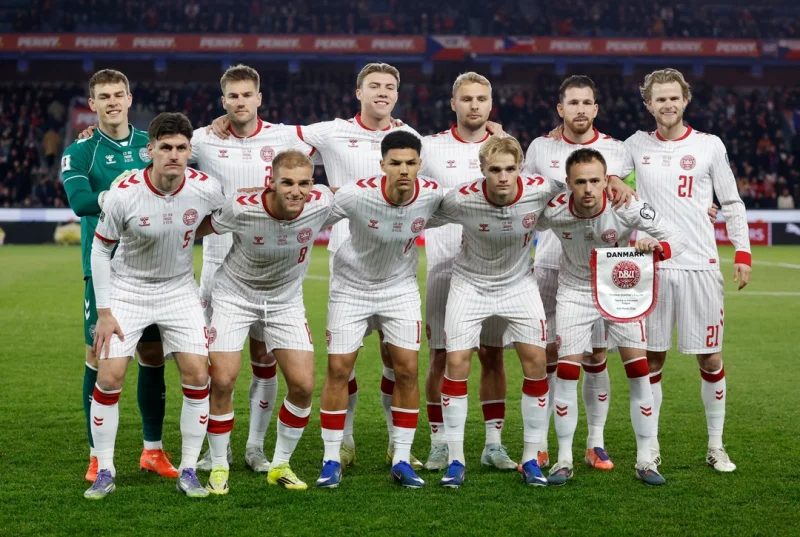
Czechia are back at the World Cup after 20 years away, and they earned the place the hard way: two penalty shootout triumphs in the playoffs over the Republic of Ireland and Denmark. The run has put Miroslav Koubek’s side into a tournament that now features 48 countries, and it has also handed the team a schedule that will test them from the first whistle.
The Czech team base is in Dallas, but their group games will send them across three cities and several time zones. They open against South Korea in Guadalajara on 11 June at 8pm local time, face South Africa in Atlanta on 18 June at 12pm local time, and finish against Mexico in Mexico City on 24 June at 7pm local time. For supporters in Britain, those fixtures fall at 3am on 12 June, 5pm BST and 2am on 25 June BST.
The weight of the qualification story sits on the names that carried it. Ladislav Krejci stepped in as captain and scored in both playoff matches, while Matej Kovar saved two penalties in the World Cup playoffs. Tomas Soucek remains the leader in midfield, Patrik Schick is expected to be the main attacking weapon again, and Lukas Provod and Pavel Sulc are among the players expected to provide creativity. Lukas Hornicek is also pushing for the goalkeeping position after Kovar’s decisive display.
The turnaround did not begin in smooth fashion. Czechia suffered a historic defeat to the Faroe Islands during qualification, a result that cost Ivan Hasek his job. Koubek took over after Hasek was sacked, and the atmosphere changed quickly enough for the team to recover and reach the finals. Before that, the side had been viewed as a team that for a long time lacked technical players and leaned heavily on physicality, work-rate, aggression and set pieces.
There is still a practical edge to what lies ahead. Long-distance travel, time-zone changes and altitude will matter at the World Cup, and that is especially true with Guadalajara listed at 2,000 metres above sea level. Even so, Czechia have already shown they can survive pressure after the shootout wins that sent them through. Koubek, who was set to become the oldest coach at a World Cup at 74 before Dick Advocaat was reappointed to lead Curaçao, has taken a route few top-flight managers have followed: he coached in the lower Czech leagues while working as an insurance broker until his 50s, then later managed Slavia Prague and Viktoria Plzen and won the league with Viktoria Plzen in 2015.
The fans have already made their own feelings clear. After the Faroe Islands defeat and the poor results that followed, there were sharp reactions from the stands, with the message from the coach that supporters had every right to show their disagreement with the recent performances. The response from the players, he said, should have gone the other way: they should have thanked the active fans. Czechia have now bought themselves a place on the biggest stage, but the next test is whether a squad rebuilt under pressure can turn survival in qualifying into something more when the tournament begins.