The federal government’s special investigator for war crimes allegations and the Australian Federal Police have asked the National Anti-Corruption Commission to investigate possible leaks about the arrest of Ben Roberts-Smith, after officials said journalists appeared to know about the operation before it happened.
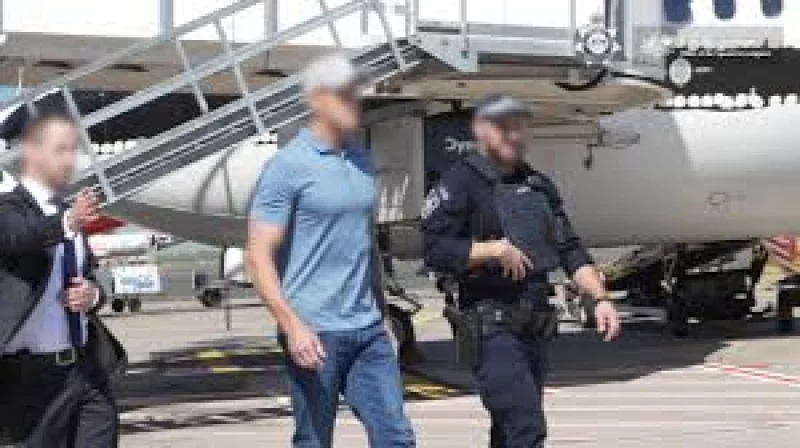
Chris Moraitis told Senate estimates on Tuesday night that he was surprised reporters had prior knowledge of the 7 April arrest at Sydney airport. He said his office and the AFP had referred possible unauthorised disclosures to the Nacc and were waiting for a response. The federal police also released video of the 47-year-old being taken from a plane on the tarmac, accompanied by officers.
Roberts-Smith faces five charges of war crime murder, with prosecutors alleging he killed unarmed civilians during his service with the Australian SAS in Afghanistan. The five charges relate to three incidents during his deployments with the SAS on Australia’s two-decade mission in Afghanistan. He has denied the allegations and said, “I categorically deny all of these allegations”.
Moraitis said his office was aware journalists were present on the morning of the arrest, a detail that has sharpened concern inside the investigation team about how the information escaped. Asked about the leak, he replied, “Good question.” He also said, “It’s a matter that concerns me. The media seem to have been privy to things, and therefore we’re taking steps to ascertain what happened there.”
He said, “I can say that the AFP and I have written to the Nacc about this, asking them to consider and to provide information about that … we believe there’s been an unauthorised disclosure.” Moraitis added that it “surprised me that that would happen, because we’ve usually been pretty good on keeping a low profile.” He said the Nacc had not yet responded.
The arrest has now become part of the wider focus on how sensitive information was handled around one of the country’s most closely watched war crimes matters. Roberts-Smith, a Victoria Cross recipient and former SAS corporal, has long been at the center of allegations tied to Australia’s deployment in Afghanistan, and the concern now is not only the charges he faces, but who knew about the arrest before police moved in.
Moraitis said his office had told the office of the attorney general, Michelle Rowland, that the arrest was set to take place that day, but no operational details such as the location were disclosed. That leaves the key question squarely on the leak itself: whether the warning signs came from within the official process, and whether the anti-corruption commission will identify who disclosed them.