


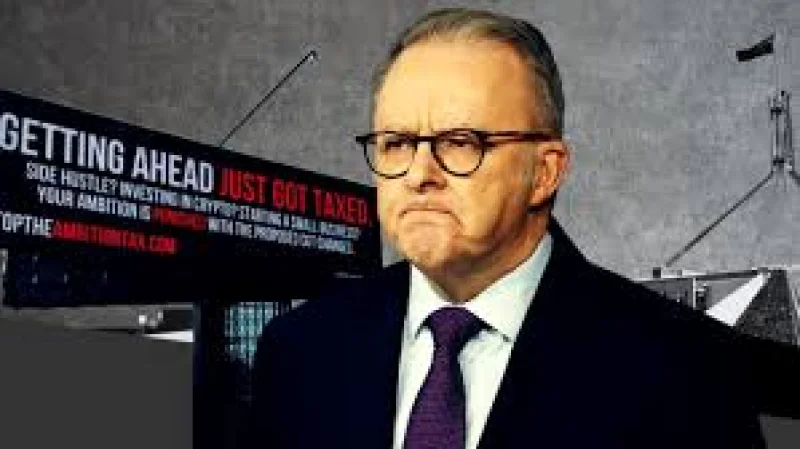
Canberra’s latest fight over the budget’s capital gains tax plan was thrown onto the airport concourse on Monday, as Joseph Daoud paid for a billboard outside the terminal and messages on digital screens inside it to attack the proposed changes. The sign, timed to run throughout the parliamentary sitting week, warned: “Investing in shares? Saving a deposit? Building a business? Your ambition will be taxed under proposed CGT changes.”
Daoud said he spent $17,500 on the campaign because, in his view, the government was ignoring the people most exposed to the changes. “After meeting with dozens of small business owners, fielding phone calls from first home buyers and holding roundtables with the Shadow Treasurer … ambitious Australians still aren’t being listened to,” he said. “So if Canberra wants to live in its own bubble and act like we don’t exist, I’m going to make sure they see each and every one of us.”
The billboard lands as Parliament begins a new sitting week and politicians fly into Canberra, with the government under pressure to explain why it is applying a heavier tax regime beyond housing. The budget changes would scrap the current 50 per cent capital gains tax discount and replace it with a discount based purely on inflation, a shift that has drawn backlash from the start-up, small business and young share investor sectors.

That backlash intensified over the weekend after UNSW economist Richard Holden released analysis criticising the proposal. Holden said on Sunday that higher-performing businesses would effectively be punished when they were sold. He called the plan “the worst possible plan for a country in need of more jobs, and more economic growth,” and added, “It’s a productivity tax in the middle of a productivity crisis.”
The numbers behind the dispute are what make it politically dangerous for the government. Under a typical investment scenario of historic returns of about 9 per cent and inflation at the Reserve Bank of Australia’s 2.5 per cent target, share investors could end up paying nearly double the rate of tax on gains. Former Liberal Party Treasurer Peter Costello argued in The Australian Financial Review that younger Australians would be locked into these higher taxes for life. “The young will have a lifetime of these higher taxes. They will never have the same opportunities their parents had – or indeed that members of the Albanese cabinet had – to save, invest and keep a decent share of the proceeds,” he wrote.
Daoud said the airport campaign was meant to keep the issue in view while lawmakers returned to work. “I spent $17,500 on these billboards because I know for a fact that this budget is going to disable hope for all young Australians, anyone looking to start a business, anyone who invests in shares or other markets or anyone that is looking to purchase their first home,” he said. The political test now is whether the government can better explain why it is extending the tax hit beyond property, or whether the airport message becomes the one that sticks.
