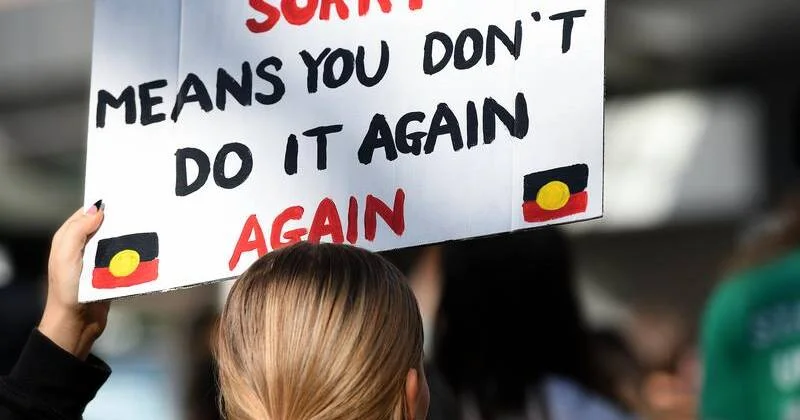
The Healing Foundation has released a new plan urging governments to act on the Bringing Them Home report ahead of National Sorry Day commemorations on Tuesday, as survivors of the Stolen Generations continue to press for redress, care and records access.
For Aunty Lorraine Peeters, the plan lands in a week that carries the weight of a life marked by removal. The 88-year-old was taken from her home at Brewarrina mission in north-west New South Wales when she was four years old and spent the next six years at the Cootamundra Aboriginal Girls Home, where she says she was separated from her siblings, trained as a domestic servant and systematically brainwashed to be white.
She recalled the treatment in blunt detail. “On entry, all your clothes were burnt, and then you were doused, or what they call delousing, and this is back in the 1940s so it was sheep dip,” she said. “And then your head was shaven, you were given a new identity and religion.”
Peeters said the institution left little room for childhood. “From four until I turned, I think I was 10 years. They had enough time to assimilate me into something I shouldn’t have been. Our mantra was: ‘Be white, speak white, live white every day,’” she said.
Her testimony helped shape the national inquiry that led to the Bringing Them Home report, tabled nearly 30 years ago. Since then, she has remained part of the effort to support survivors, co-founding the Coota Girls Aboriginal Corporation 13 years ago and helping establish trauma-informed support for survivors and families like her own.
In 2008, she also presented Kevin Rudd with a coolamon representing the lost babies and children ahead of the national apology to survivors and their families. That moment remains one of the most visible public acknowledgements of the policies that split children from country, family and culture.
The new plan, titled From Sorry to Action: A plan to act on Bringing Them Home, says that acknowledgement alone is no longer enough. It calls for removing medical co-payments for survivors and establishing a comprehensive redress scheme in all states and territories. Queensland remains the last jurisdiction without a targeted compensation scheme, while Western Australia announced its redress program last.
Shannon Dodson said the needs of survivors are changing as they age. “Most survivors are now eligible for aged care, and from an overall health, social and emotional wellbeing perspective, it’s really looking at what kind of trauma-informed and culturally safe approaches are needed to ensure that survivors are not re-traumatised during their ageing,” she said.
Peeters said the support system is still not where it should be. “Survivors are still suffering trauma, survivors with disability or that are mentally not right, given the trauma they’ve been through, and the organisation is still running on the smell of an oily rag with nothing,” she said.
The push comes as the generation that lived through removal is growing older, with many now needing aged care that does not repeat the harm of the past. The Healing Foundation’s message is direct: the country has spent decades saying sorry, and the next test is whether governments are prepared to fund the action that apology required.