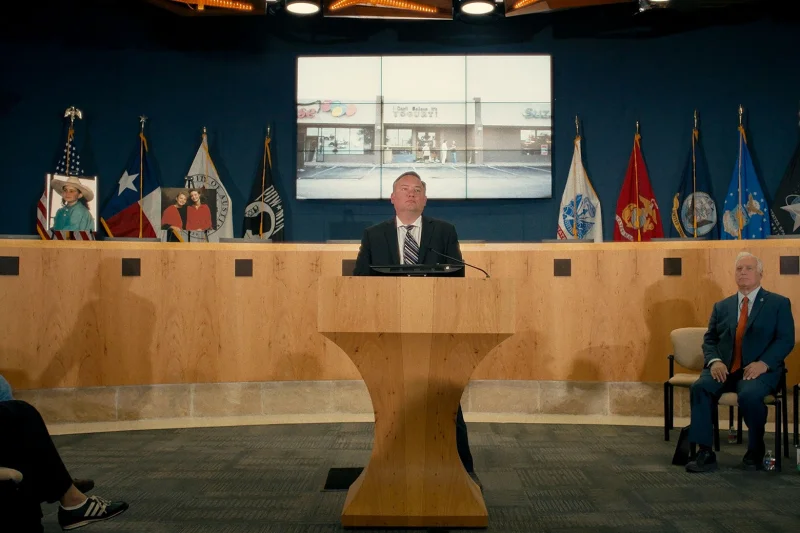
For 34 years, Austin lived with the question that billboards once asked in plain sight: “Who Killed These Girls?” This week, the answer landed in a case that had long seemed beyond repair. The four teenage girls slain in a yogurt shop in 1991 were killed by Robert Eugene Brashers, a serial killer whose crimes were uncovered years after his death by suicide in 1999.
The breakthrough came after Dan Jackson started plugging a single.380 shell casing and one incomplete DNA profile into national databases. Jackson had said, “No, no, no. If there’s anything, it’ll take months,” and that is what it took before the evidence finally pointed to Brashers. The fifth episode of The Yogurt Shop Murders premieres May 22 on HBO, adding a new audience to a case that had already consumed generations of Austinites.
Brown’s four-part series followed the wreckage left behind by a murder case that had remained unsolved for 34 years and had been clouded by police misconduct and degraded physical evidence. The sexual assault and murder of Amy Ayers, Eliza Thomas, Jennifer Harbison, and Sarah Harbison haunted Austin for decades, in part because two men, Robert Springsteen and Michael Scott, were convicted on coerced confessions before those convictions were overturned in 2009 and the charges against them were dropped. Maurice Pierce and Forrest Welborn were accused but never tried.
The case took another turn in February, when a Texas judge ruled that Springsteen and Scott were entirely innocent of the crime. Soon after, the city of Austin agreed to pay $35 million in restitution to the men unjustly accused of the murders and pledged to ban unsupervised interrogations of underage suspects. That left the city acknowledging, at last, that the biggest failure in the case was not only that the wrong men were punished, but that the real killer had remained hidden for so long.
What changed the case was not a confession, a tip or a courtroom reversal, but old evidence finally being made to speak. Brashers could not be charged after his death, but the identification closed the central mystery that had defined the case for decades and exposed how close Austin came to never knowing the truth at all.