


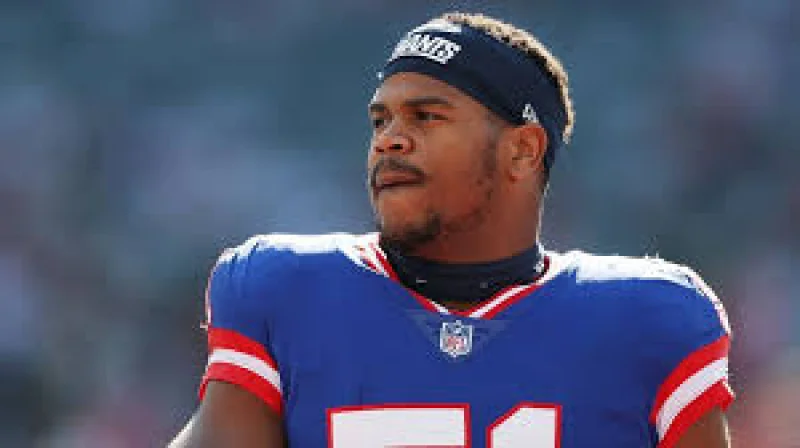
Jaxson Dart, the New York Giants’ starting quarterback, sparked a locker room debate on Friday when he introduced President Donald Trump before a speech in Suffern, New York. Abdul Carter reposted the video the same day and questioned why a teammate was taking that stage in the first place.
Dart opened his remarks by telling the crowd, “Big Blue Nation, it’s a pleasure to be here. I got to start this off with a ‘Go Big Blue,’” before adding that it was “an honor” and a “privilege” to introduce “the 45th and 47th President of the United States of America, President Donald J. Trump.” His appearance quickly became the kind of off-field flashpoint that can swallow a team’s week, the sort of moment that has also sent people digging through other football stories, from Drew Allar’s reset as the Steelers rebuild a rookie quarterback from the ground up to Craig Morton’s place in Broncos history.
By Saturday, the reaction had widened. Carter wrote, “Thought this s—t was AI, what we doing man,” and former Giants quarterback Lawrence Tynes said on X that “the locker room is a sacred place because it brings together everyone from all walks of life and beliefs for one common goal,” adding that “calling a teammate out publicly for his political views and to get attention is nasty work.”
Jemele Hill then defended Carter and pushed back on the criticism, asking, “So Jaxson Dart gets to publicly express his political beliefs, but Abdul Carter doesn’t?” She also questioned whether it made sense for “the face of the franchise” to attend “a political rally for a president that is considered to be hugely divisive,” and said, “Let’s not do that thing where we’re trying to pretend this isn’t what it looks like.”
Hill went further, saying Carter is “a black man and a Muslim” and that, given Trump’s past comments and actions toward both groups, “it’s fair and also not surprising that he has a problem with it.” That framed the dispute as more than a simple disagreement over team unity. It turned the focus to whether players are being judged by the same standard when one speaks publicly and another reacts to it.
The exchange matters now because it landed in the middle of a young quarterback’s first public moments in a prominent role and immediately pulled his teammate, his former teammate and a national political figure into the same argument. For the Giants, the next question is not whether the video spread — it already has — but whether the debate fades on its own or keeps pulling the locker room into a conversation it did not ask for.
