


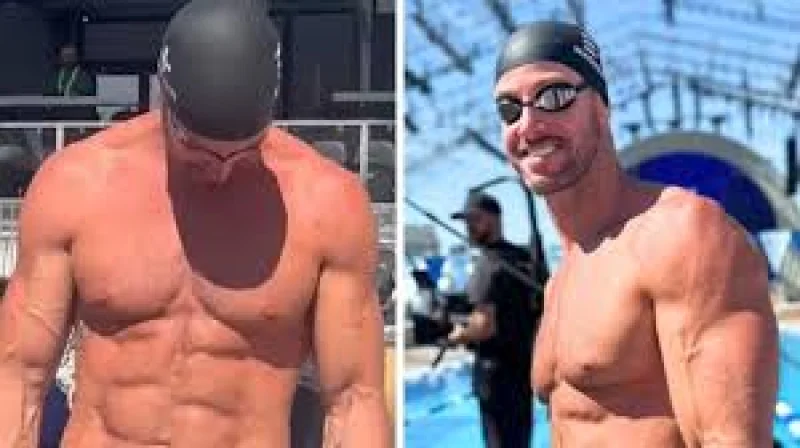
Christian Angermayer is betting that a sports meet built around banned drugs can draw a crowd. The German billionaire behind the Enhanced Games said millions will watch the inaugural event on Sunday, when the first races and lifts are scheduled to begin.
The launch is already carrying the sort of numbers that make the pitch impossible to ignore. An Enhanced Games study based on 36 of the 42 athletes competing this weekend found that all but two had taken performance-enhancing drugs banned by anti-doping authorities. Enhanced said 91% of the athletes are using testosterone, 79% human growth hormone, 41% EPO and 29% anabolic steroids.
The program on Sunday will include the 100m sprint, several swimming races and weightlifting events, a lineup meant to give the project a familiar Olympic shape while stripping away the rules that define elite sport elsewhere. Critics have labeled the event the “Steroid Olympics,” and that phrase has followed it into the run-up because the organizers have made no secret of the drugs question at the heart of the project.
Angermayer, who made fortunes from biotech, bitcoin and psychedelics, has also become known for collecting dinosaur fossils. He said he has a triceratops skull in London and is getting it put in his apartment. He said he also owns a T-rex and plans to sell it for around $40 million. Asked about the skull, he said, “It’s in London. I’m actually getting it put in my apartment. You need to come by. It’s a complete nightmare to insure it, and it needs a crane to get in, but it’s so spectacular.”
That appetite for rare objects fits the way he talks about the event itself. Angermayer said he does not spend much on those fossils because he knows where to find them, adding that he has bounty hunters who do that. He is making a bigger wager on Enhanced Games 2026, including the idea that it could turn viewers toward products such as $209 testosterone cream and $119 GHK-Cu Copper.
The pitch rests on a broader argument about medicine and performance. Angermayer said he does not understand why people limit medicine only to treating illness, and asked whether society should think more about how not to get sick in the first place. He said medically approved drugs, used with a doctor, should be fair game if they help people reach a goal. That message puts the project in direct conflict with mainstream sport, where anti-doping rules are supposed to protect both fairness and health.
The friction around the event has not only been about the drugs. initially had its accreditation application rejected before organizers later changed their minds, a small but telling sign of how closely the project is being watched and how much it still wants the attention it first seemed willing to deny.
Angermayer said he expects the backlash and is not backing away from it. “I know I’m right,” he said. “I was looking forward to this.” He added, “Only people who have not understood what we’re doing, or are” — a remark that trails off, but captures the confidence behind a spectacle designed to challenge the rules of elite sport rather than fit within them.
For now, the main question is not whether Enhanced Games 2026 will make noise. It will. The real test begins on Sunday, when the 100m sprint and the rest of the opening program move the event from a controversial idea into a live competition, and the scale of its audience will decide whether Angermayer’s gamble looks like a provocation or the start of a lasting alternative.
