


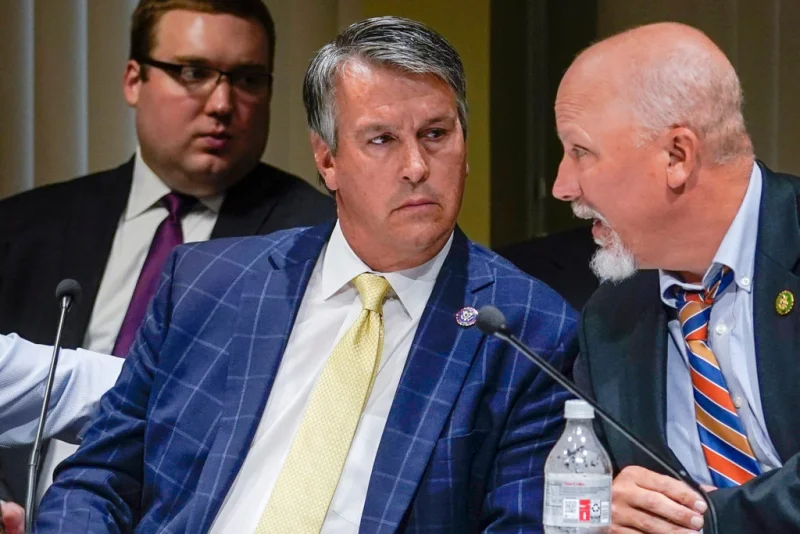
Rep. Barry Moore and Alabama Attorney General Steve Marshall advanced Tuesday night from a crowded Republican primary for Alabama’s open U.S. Senate seat and will face each other again on June 16. On the Democratic side, Everett Wess and Dakarai Lariett emerged from their own field and also move on to a June 16 runoff.
The race was decided under Alabama’s runoff rules, which require a candidate to win a majority. Moore, a three-term member of the House who has Donald Trump’s backing, and Marshall separated themselves from a field of seven candidates in the Republican contest. The Democratic primary was filled with fresh political blood, and neither Wess nor Lariett has held elected office before.
The seat became open after Tommy Tuberville decided in 2025 to leave the Senate and run for governor of Alabama. That set up a contest in a state where Republicans have controlled the Senate seat for decades, with Doug Jones’s victory in a 2017 special election standing as the lone recent break in that pattern. The path to the nomination now runs through the June 16 runoff, when both parties will try again to settle races that the first round could not finish.
The split result also showed how wide the Republican field was and how little room there was for anyone to claim the nomination outright. Moore and Marshall both made the cut, but neither was able to clear the majority threshold that Alabama requires, sending the primary into a second round that will test whether Trump’s endorsement and Moore’s House record outweigh Marshall’s statewide profile. On the Democratic side, the runoff offers two newcomers a chance to turn a low-profile primary into a general-election foothold in a state where Democrats have struggled for years.
For now, the opening question in Alabama’s Senate race has been answered: the nominees are not set yet, and the real fight starts again on June 16.
