


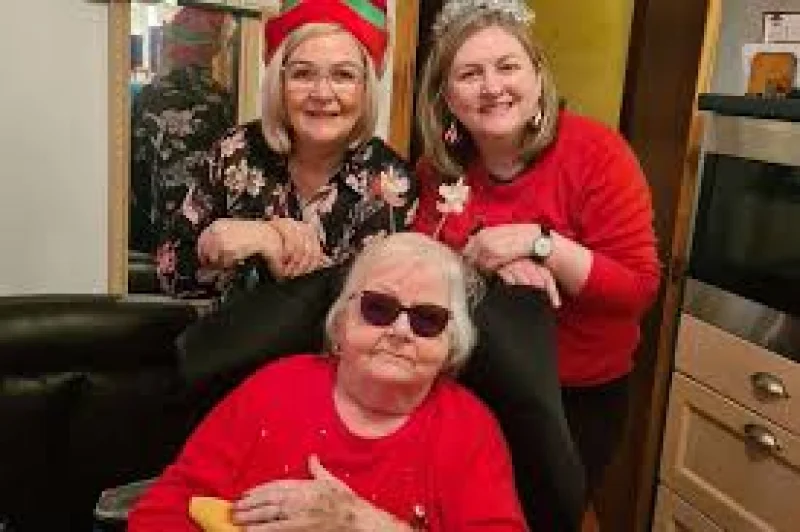
Brenda Young remembers the moment the pain began. Within minutes of her mum dying last November, the 57-year-old residential social worker from Aberdeenshire felt intense chest pain and was rushed to hospital, where doctors found she had suffered a takotsubo attack.
“I just remember thinking – this cannot be happening – not today,” Young said. “I knew there was something really wrong. My family were all around my mum’s bedside and I thought ‘how can I tell them I’m having chest pain? Not now!’” She said she could not get her head around the fact that her mum was gone and the same thing was happening to her. “I didn’t realise it was actually something that really did happen to your heart, and it’s quite a serious condition that there is no treatment for.”
Her experience comes as the first-ever clinical trial of a medication for the long-term management of takotsubo syndrome gets under way, in a seven-year study funded by the National Institute for Health and Care Research. Scientists and clinicians from across the UK, including Aberdeen, Glasgow and Edinburgh, will follow almost 1,000 patients from 40 hospitals in the hope of finding a treatment that can do more than simply watch and wait.
Takotsubo syndrome, often mistaken for a heart attack, is triggered by sudden emotional stress. For many patients, the shock is over before they even understand what has happened. Young’s case shows how quickly the condition can strike and how little there has been to offer patients once it does.
Professor Dana Dawson said the problem is larger than many people realize. “Takotsubo syndrome affects thousands of people in the UK year on year – most of whom are women,” she said. “The figures are stark in that one in ten will ultimately die from their condition.” Dawson said diagnosis has improved sharply in the past decade. “It is a growing problem, and with ever-improving clinical recognition, the diagnosis rate has increased 5-fold in the past decade.”
The trial will test renin-angiotensin system inhibitors, medicines that relax blood vessels and are already used for heart attacks caused by blocked arteries, as well as for high blood pressure and heart failure. For takotsubo patients, though, they have only been suggested as a possible treatment until now.
Dawson said that leaves doctors with too little to go on. “The long-term risk of death or serious health problems after a takotsubo attack is similar to patients who suffer a heart attack due to a blocked heart artery but despite this, there are no proven therapies for takotsubo, no treatment guidelines, leaving doctors and patients uncertain and concerned,” she said.
The new study is meant to answer that gap directly. Over the next seven years, researchers will look at whether the medication can change the outlook for patients like Young, who learned in the hardest possible way that a condition brought on by grief can become a serious heart problem in its own right.
