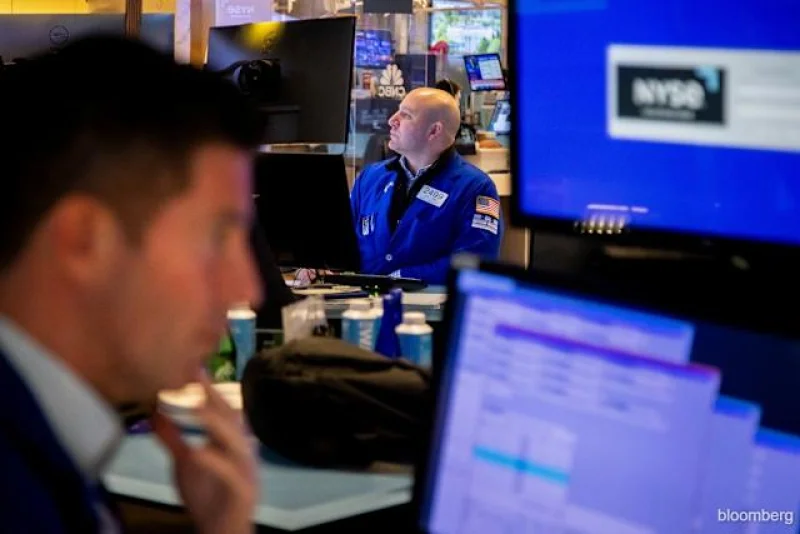
U.S. stock markets wavered Tuesday as the Dow Jones Industrial Average struggled for direction, with investors weighing renewed pressure on semiconductor shares, persistent inflation worries and the next signals from the Federal Reserve.
Dow Struggles After Mixed Start To The Week
The Dow entered Tuesday’s session with investors still assessing whether the recent rally in major U.S. indexes has enough support to continue. Futures pointed to a softer open before trading began, while live market data showed the blue-chip index moving within a relatively tight range after Monday’s modest gain.
The Dow had finished Monday higher, helped by gains in several large industrial, software and consumer names. That advance offered a partial cushion after broader weakness in growth stocks, but Tuesday’s setup was more cautious. Traders appeared reluctant to chase prices higher with inflation concerns still shaping expectations for interest rates.
The Dow Jones Industrial Average remains a key gauge for blue-chip U.S. companies, though its price-weighted structure means moves in higher-priced components can have an outsized influence on the index. That can make the Dow’s daily performance look different from the broader S&P 500 or the more technology-heavy Nasdaq Composite.
Chip Stocks Weigh On Broader Sentiment
Technology shares remained a central source of pressure, especially semiconductor stocks. Several major chip-related names extended recent declines before the open, reflecting concern that valuations in the artificial intelligence and hardware trade may have moved too far, too quickly.
The weakness mattered beyond the Nasdaq. Investor enthusiasm for AI infrastructure has helped drive a large share of the market’s gains over the past year, and any sustained pullback in chipmakers can affect sentiment across software, cloud computing, data-center suppliers and other growth-linked sectors.
That does not necessarily point to a broad market reversal. Some software names showed resilience, and investors continued to differentiate between companies with strong earnings visibility and those more exposed to valuation pressure. Still, the rotation underscored a more selective tone after a powerful advance in U.S. equities.
Inflation And Rates Keep Traders Cautious
The bigger macro concern remains inflation. Even with Treasury yields easing slightly and oil prices dipping from recent highs, investors are watching whether price pressures could force the Federal Reserve to keep policy tighter for longer.

Markets have spent much of the year balancing two competing views: that corporate earnings and technology investment can keep lifting stocks, and that stubborn inflation could limit how far valuations can expand. Tuesday’s wavering action reflected that tension.
The next Federal Reserve communications are expected to draw close attention because they may clarify how policymakers are interpreting inflation, labor-market conditions and financial-market strength. Any language suggesting renewed concern about price pressures could weigh on equities, particularly sectors priced for strong future growth.
Oil, Geopolitics And Earnings Add To The Uncertainty
Energy markets also remained part of the story. Crude prices have stayed elevated amid geopolitical tension, and that has complicated the inflation outlook for investors. Lower oil on the day offered some relief, but prices remained high enough to keep fuel costs and corporate margins in focus.
Earnings are another major test. Investors are watching major retailers and technology companies for signs of how consumers and businesses are behaving in a higher-cost environment. Retail results can offer clues about household spending, while chip and software earnings may show whether AI-related demand is still strong enough to justify premium valuations.
For the Dow, the mix is especially important because the index includes companies tied to consumer spending, industrial demand, financial conditions, health care and energy. That broad exposure gives it a different role from the Nasdaq: it can reflect whether economic confidence is spreading beyond technology.
What Investors Are Watching Next
The market’s near-term direction may depend on whether Tuesday’s caution turns into a broader pullback or remains a pause after recent gains. A stable close would suggest investors are still willing to buy weakness, while a sharper decline could signal growing anxiety about inflation, rates and stretched technology valuations.
For now, the message from Wall Street is not panic but hesitation. The Dow Jones Industrial Average is holding near historically elevated levels, yet traders are showing less appetite for risk as they wait for clearer signals from policymakers, earnings reports and commodity markets.
That leaves the stock market in a sensitive position: strong enough to remain near highs, but vulnerable to any fresh evidence that inflation is not easing quickly enough or that the AI-led rally is losing momentum.