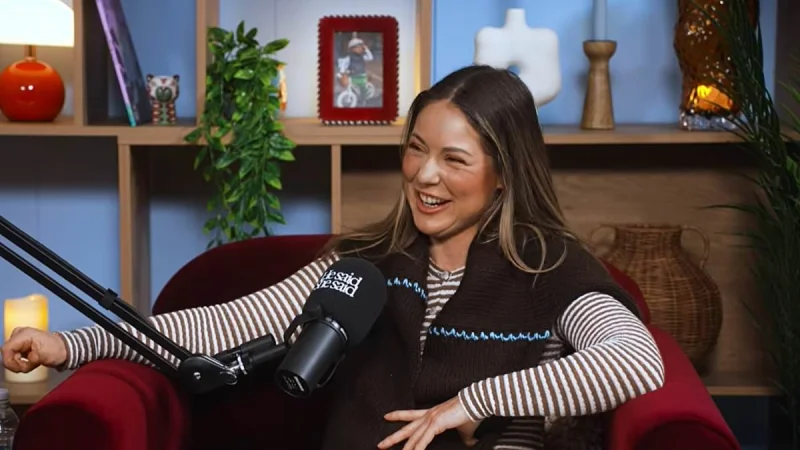
Louise Thompson and Ryan Libbey have been criticised after remarks on their He Said, She Said podcast about children starting school still in nappies, with a clip from the episode later removed from the show’s Instagram page.
The row followed comments made while the pair discussed annual survey figures from primary school staff in England showing that teachers estimated 26% of reception pupils had frequent toilet mishaps, rising to 36% in the north-east. The same survey, carried out by Kindred Squared, found 28% of children were unable to eat and drink independently and 25% struggled with other basic life skills.
Thompson said she was shocked by the figure that one in four children arrive at school before being potty trained. Libbey said it was “a raw deal” for teachers. Thompson also said, “I think a basic human right is to teach your child before the age of four how to use the loo and how to wipe their bum,” and the couple laughed as they talked about children in reception who could not eat and drink on their own.
That reaction quickly spilled onto the podcast’s social media accounts, where listeners posted criticism after the clip circulated online. The Instagram feed autismandourworld also reposted the clip and said children with special needs deserve dignity, understanding, and compassion — not public ridicule.
The backlash widened because the report behind the figures does not separate how many delays are linked to disabilities or special educational needs, something critics said was missing from the discussion. Some also pointed to Thompson’s family connection to neurodivergence through her brother Sam Thompson’s ADHD and Autism Spectrum Disorder diagnosis, while others referenced her own health history, including that she has a stoma bag.
Thompson and Libbey are parents to their son Leo, who is four, and the comments landed in a debate that has now moved beyond simple frustration about school readiness. The broader question is whether the podcast turned a difficult issue for teachers into a punchline, and whether the removal of the clip is enough to draw a line under the controversy.