


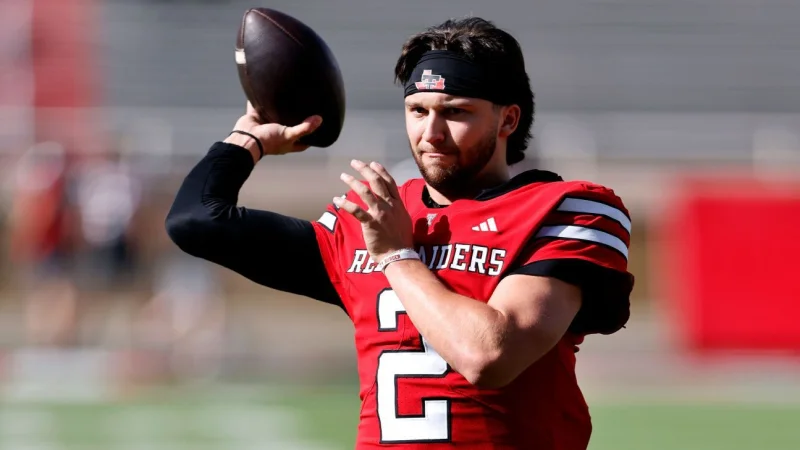
Brendan Sorsby filed for an injunction against the NCAA on Monday in district court in Lubbock County, Texas, asking a judge to clear the way for him to play for Texas Tech in the 2026 college football season. The filing says the quarterback is currently ineligible because of prior violations of the NCAA’s sports gambling rules, and it asks the court to stop the association from using those bylaws to deny or withhold his reinstatement.
The filing says Sorsby has been in an inpatient residential treatment facility since late April, after he revealed that he had placed thousands of bets on sports. It also says he suffers from a clinically diagnosed gambling disorder. In an affidavit, Sorsby said not being able to practice with the team would be “severely detrimental” to his mental health and his development as an athlete.
The NCAA has not made any public decision or declaration on Sorsby’s status. But the filing seeks more than a pause. It asks that he be allowed to participate fully for Texas Tech in 2026, including games, and says any NCAA action to the contrary should be void and unenforceable. Sorsby is represented by attorneys Jeffrey Kessler and Scott Tompsett.
The case lands in a part of college sports where the rules are strict and the penalties can be severe. The NCAA prohibits student-athletes from betting on any NCAA-sanctioned sport, whether professional or collegiate, and punishments can include permanent ineligibility, especially when athletes wagered on their own team or manipulated their performance. The filing says the NCAA requested a live interview and records during its process, but it also says Sorsby offered to accept a two-game suspension tied to completing residential treatment for his gambling condition.
Sorsby’s court filing frames the dispute as one about treatment and future eligibility, not just punishment. It says he also offered to work with the NCAA to educate others about the dangers of gambling. In one sharply worded passage, the filing says the NCAA has “weaponized his condition to shore up a facade of competitive integrity, while simultaneously profiting from the very gambling ecosystem it polices.” It closes that argument by saying, “The relief is narrow: one student-athlete and one senior season.”
What happens next now turns on whether the court is persuaded that Sorsby should be allowed to move forward with Texas Tech while the NCAA’s gambling rules remain in the background. For Sorsby, the practical question is immediate: whether his path to the 2026 season will be shaped by the treatment he has already entered, or by a ruling that keeps him on the sideline.
