


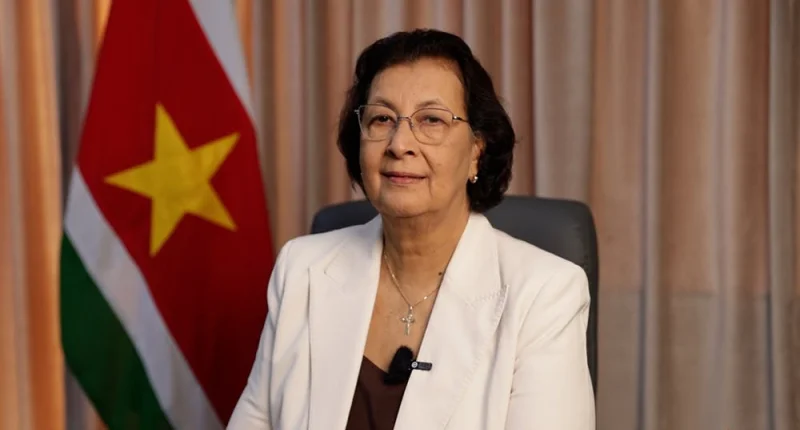
President Jennifer Simons said Suriname’s government will keep its attention on the development of the interior after recent visits to Boven-Suriname and Galibi showed both progress and unfinished work. She said several villages have already been linked to solar-energy systems, but more has to be done before the network works the way it should.
The systems now provide electricity throughout the day, using solar power, batteries and a backup emergency generator. Simons said that has lowered fuel costs and improved living conditions for villagers. “De mensen zijn er blij mee,” she said of the reception on the ground.
Her comments came as the government continues a development program for Suriname’s interior that began several years ago and has been carried on by successive governments. The recent trips to Boven-Suriname and Galibi gave Simons a chance to see what has changed since the effort began and what still falls short.
Energy remains one of the clearest areas of progress, but not a finished one. Simons said some villages still need old wiring replaced, while the government is also looking at independent street lamps with their own solar panels. Some villages already have financing for energy projects, but for others the government is still seeking funds as it works toward nationwide coverage.
That gap matters because the interior still lacks full energy access in several places, even after years of work. Simons said visible results take time. “Dingen komen niet in één dag of in één maand,” she said, underscoring that the changes residents want are arriving piece by piece rather than all at once.
Water is another urgent need. Access to safe drinking water remains one of the biggest concerns in several interior villages, and the government is preparing to expand supplies further. It already has pumps donated by the Chinese government, which it is using as part of the effort to improve access.
The broader backdrop is still difficult. Parts of Suriname are dealing with water overlast and damage to agricultural crops, adding another layer of strain for communities far from the coast. Against that setting, the government’s interior program continues to serve as both a development plan and a test of whether basic services can reach remote villages on a reliable basis.
For now, the story in the interior is not a dramatic breakthrough but a slow build: more homes lit, less diesel burned, and cleaner water still to come. The next measure of success will be whether the remaining villages move from partial access to something closer to the full energy and water coverage the government says it wants to deliver.
