


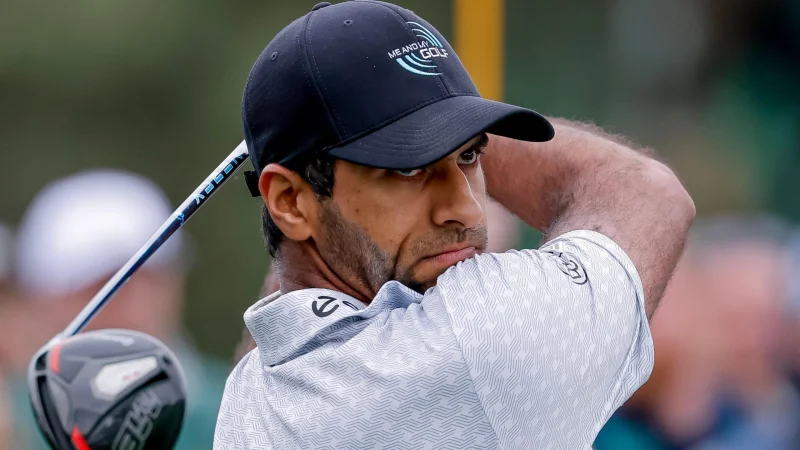
Aaron Rai’s background has become a point of wider public interest as the English golfer’s profile rises on the world stage. Rai, who represents England, is of Indian heritage through his family, with a multicultural upbringing shaped by Wolverhampton, his father’s Indian roots and his mother’s journey from Kenya to England.
Rai’s Heritage Reflects A British Asian Golf Story
Rai was born in Wolverhampton, England, and built his career through the British and European golf systems before establishing himself on the PGA Tour. Public interest in Aaron Rai ethnicity often centers on how his family history fits into a sport that has historically had limited South Asian representation at the highest professional levels.
His father was born in England after his family came from India. His mother, Dalvir, moved to England from Kenya with her family as a teenager. That background gives Rai a British identity closely connected to Indian heritage and East African migration history, a familiar story for many British Asian families who settled in the Midlands during the postwar decades.
Rai has spoken in past interviews about the role his parents played in his development, especially the sacrifices required to support a young golfer in a sport that can be expensive and demanding. His public image has often been shaped less by celebrity and more by discipline, humility and visible respect for his family.
Why His Background Is Resonating Now
The renewed attention around Rai’s ethnicity comes as his golf career reaches a broader audience. He has moved from a respected European Tour and PGA Tour competitor into a more prominent figure in global golf, bringing new visibility to a player whose rise has been steady rather than sudden.
For many fans, Rai’s background matters because representation in golf remains uneven. The sport has produced global stars from many countries, but players of South Asian heritage remain relatively rare in elite men’s golf. Rai’s success therefore carries significance beyond a single leaderboard result, particularly for younger British Asian athletes and families who may not have seen many golfers with similar roots in major contention.
That context should not reduce Rai’s career to identity alone. His results have been built on technical consistency, accuracy and years of development across lower-tier tours. Still, his heritage is part of the broader story of who he is and why his rise has attracted attention beyond traditional golf audiences.
Family Influence Shaped His Career
Rai’s route into professional golf was not built on a conventional country-club pathway. His father learned about the golf swing through books and helped guide him in the early stages of the game. That detail has become part of Rai’s public story because it reflects a family-driven approach rather than a heavily resourced academy background.

His mother’s Kenya connection also became an emotional part of his early career. Rai won the Kenya Open in 2017, a victory that carried personal meaning because of his family’s history. The moment connected his professional progress with his mother’s past and gave his breakthrough on the Challenge Tour a deeper family resonance.
Rai turned professional as a teenager and gradually worked through the competitive levels of European golf. He later won on the European Tour and then claimed his first PGA Tour title at the 2024 Wyndham Championship. Each step added to his reputation as a precise, composed player who built his career through persistence rather than hype.
An English Golfer With Global Roots
Rai’s identity is best understood as both English and British Asian. He was born and raised in England, represents England in competition and came through the country’s golf structure. At the same time, his Indian family heritage and his mother’s Kenya-to-England migration story are central parts of his personal background.
That combination is common in modern British sport, where national identity and family heritage often overlap. Rai’s story reflects the layered backgrounds of many athletes who compete under one flag while carrying family histories that cross continents.
In golf, that visibility can be especially meaningful because the sport has long wrestled with questions of access, cost and cultural reach. Rai’s rise does not erase those challenges, but it gives the game another example of a player emerging from outside its most traditional pathways.
The Significance Beyond Ethnicity
Interest in Aaron Rai ethnicity is understandable, but his growing reputation rests on performance. He is known for wearing two gloves, using iron covers and presenting a calm, respectful demeanor in competition. Those traits have made him distinctive on tour, but his scoring record has given them substance.
His career has included wins across multiple levels, including the Challenge Tour, European Tour and PGA Tour. That progression matters because it shows a player who adapted repeatedly as the standard of competition increased. His game is built on accuracy, control and patience, qualities that translate well under pressure.
As Rai continues to gain attention, his background will remain part of the public conversation. The fuller story is not only about ethnicity, but about family, migration, opportunity and the long development of an English golfer with Indian heritage who has become a significant figure in modern professional golf.
