


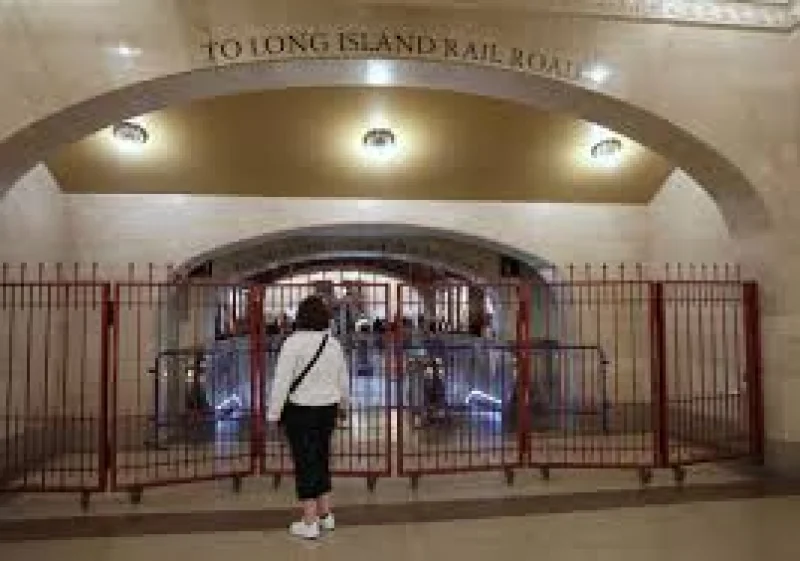
Workers on New York’s Long Island Rail Road were still on strike Sunday, leaving hundreds of thousands of riders with limited alternatives as the walkout entered its second day. The stoppage, launched on Saturday after unions and rail management failed to reach a deal on pay and work rules, is the first strike on the rail line in more than 30 years.
About 3,500 union workers are involved, and no formal talks were scheduled for Sunday. The Metropolitan Transportation Authority warned there was no substitute for the railroad and urged commuters to work remotely if possible, while limited shuttle services were offered for stranded passengers. The agency also warned of severe congestion and delays as the disruption stretched toward Monday morning’s commute.
The strike lands on North America’s busiest rail line, a system that carries commuters into New York City every weekday and has not seen a stoppage like this since a two-day strike in 1994. For riders, the timing is punishing. New York Governor Kathy Hochul urged both sides to reach an agreement, while the MTA said the shutdown was too costly to absorb without hitting its budget.

The union coalition said it went out to press for better pay and working conditions after years without wage increases. Gil Lang said the MTA left workers no choice but to strike and added that after three years without raises, the unions could not keep making compromises to cover what he called the agency’s mismanagement. MTA chair and CEO Janno Lieber said the agency could not responsibly make a deal that implodes the MTA’s budget.
The friction on the ground was visible at stations and on the app riders use to check service. Ramses Brye said he took the train at midnight, then checked the TrainTime app around 12:30 and saw the strike was still on. Queens officials also pressed the case for commuters, with Donovan Richards Jr. saying working-class people cannot simply stay home because they are not all Wall Street bankers and still need a way into the city.
That leaves the most immediate test in front of both sides: whether they can reach a deal before Monday morning’s commute deepens the damage. With no talks scheduled and no substitute for the railroad, the strike is set to keep pressuring riders, the MTA and the unions until one side gives ground.
