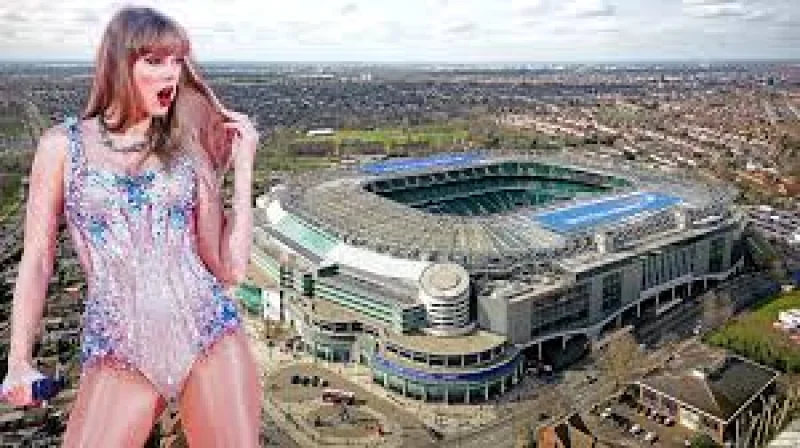
The Rugby Football Union is pressing ahead with plans to turn Twickenham Stadium into a far busier concert venue, setting out a proposal for up to 15 major non-sporting events a year despite local opposition and a petition that has drawn almost 2,000 signatures. The 82,000-seat ground currently has permission for only three such events each year.
The revised bid will be submitted to Richmond Council after the local authority rejected the RFU’s earlier application to lift the current restrictions. The union has also been holding talks with the Met Police and South Western Railway as it tries to update the plans for the stadium, which sits in a densely populated part of west London.
Under the existing rules, the three major non-sporting events cannot be held on consecutive days and are capped at 55,000 people. The new proposal would raise that ceiling to 75,000 at weekends, with a lower limit on weekdays, and the RFU says any increase in the number and scale of concerts would be phased in if officials are satisfied they are being well managed.
The union has said it has agreed extra train services with South Western Railway for event days, and it wants local residents to have priority access to tickets. A percentage of ticket sales would also be directed into local community projects. Those offers are designed to answer the complaints of people living nearby, who say the current plans risk disrupting their daily lives.
Bill Sweeney, the RFU’s chief executive, has made clear why the union is pushing so hard. He said the stadium is by far the RFU’s biggest financial asset as a sport, but that its use is now limited to the short rugby calendar, which he said is hurting the game’s growth and its benefit to the local community. He also said bringing the world’s biggest artists to Twickenham would secure £500m of funding for rugby over the next five years.
That financial logic sits at the centre of a familiar trade-off for major sports grounds: whether they should serve mainly as match-day venues or work harder as year-round assets. Twickenham is described as the country’s second biggest stadium, and the RFU argues that its current limits leave too much of that capacity unused. For readers following similar debates elsewhere, the balance between access and disruption has also surfaced around venues such as Optus Stadium, Marvel Stadium and Shell Energy Stadium.
The tension in Twickenham is not over whether concerts can be staged there, but over scale. Residents want the restrictions kept tight. The RFU wants room to grow. With a fresh planning application due and public information sessions scheduled later this month, Richmond Council will once again be asked to decide whether the promised money for rugby and the local area outweighs the pressure of far more frequent event days.